App Features
AI ProofreaderText HumanizerParaphrasing ToolAI SummarizerAI TranslatorFree ToolsFAQsUser GuideBlogPricingContactSign up - It's freeSign inBy signing up, you agree to our Terms and Conditions and Privacy Policy.
Research-backed guides on AI-powered academic writing
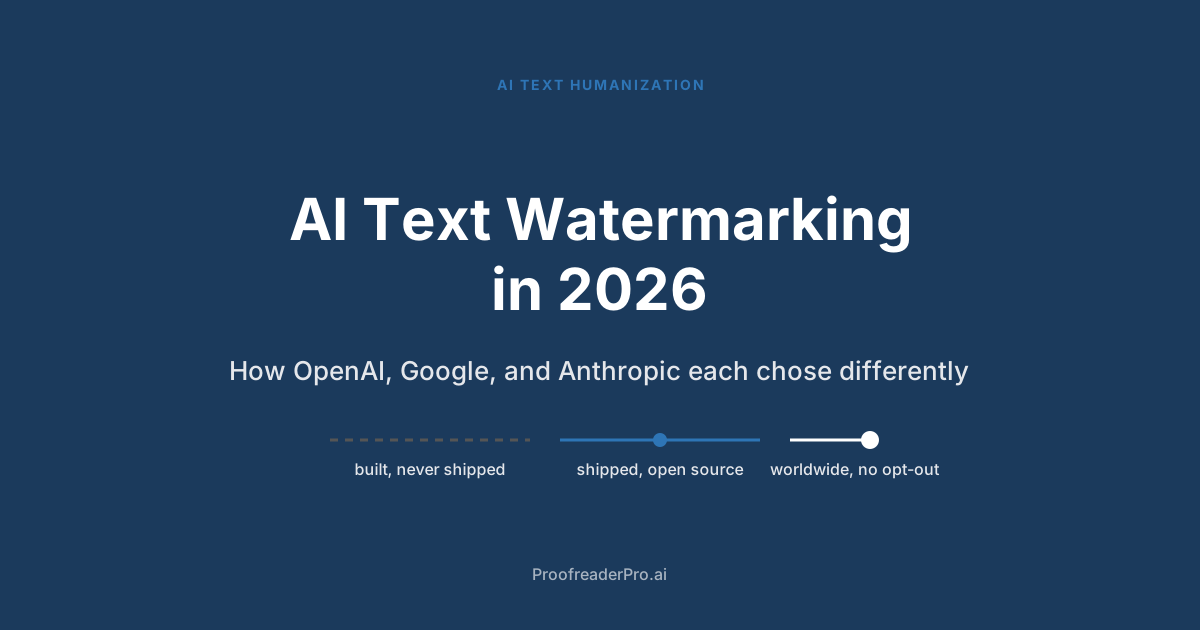
OpenAI built a text watermark and never shipped it. Google shipped SynthID and open-sourced it. Anthropic made Claude's mandatory. What each system does, what it proves, and what it means for your writing.
Claude now embeds an invisible watermark in its text. How it works, what survives it, and what a positive detection actually proves.
Step-by-step guide to reduce your AI detection score below 15%. Tested methods to decrease AI percentage on GPTZero, ZeroGPT, and Copyleaks.
A good Turnitin similarity score usually sits below 20%, but the range matters more than the number. See what every score means, what universities accept, and when to worry.
AI detectors catch most unedited AI text and still flag human writing. Real accuracy data for Turnitin, GPTZero and Originality.ai, tested on academic documents.
We tested the best AI humanizers of 2026 on academic text: detection scores, academic tone, citation handling, and which tools protect research writing.
We tested the best AI proofreading tools on real academic manuscripts: citation preservation, tracked changes to Word, and grammar fixes that stay AI-safe.
Burstiness is the variation in sentence length and structure that separates human writing from AI text. Here is how detectors measure it and how to raise yours.
Tested AI prompts for every section of a research paper, from abstracts to reviewer responses to figure descriptions. Copy-paste ready for ChatGPT, Claude, or any LLM.
Practical workflows for using Claude as an academic writing assistant, plus which Claude app, model, effort level, and plan fit serious research work.
Your Turnitin score is high and you're panicking. Here's what the score actually means, why it's probably not plagiarism, and how to lower it ethically.
Proofread, humanize, paraphrase and translate your academic writing in one place. Free to start, no credit card required.
Get Started Free