Najlepsze narzędzia AI do humanizacji w 2026 roku, testowane na tekście akademickim
Przetestowaliśmy najlepsze AI humanizery 2026 dla tekstów akademickich: wyniki wykrywania, ton akademicki, obsługę cytowań i ochronę pisania naukowego.
Przydzieliliśmy temu samemu zadaniu zestaw narzędzi AI do humanizacji tekstu: miały wziąć 600-wyrazowy fragment metodologiczny generowany przez AI o randomizowanym badaniu kontrolowanym i uczynić go niewykrywalnym, bez naruszania ani jednego cytowania, bez niewłaściwego użycia terminu technicznego i bez obniżania rejestru akademickiego poniżej poziomu wymaganego przez czasopisma.
Trzy z nich zawiodły od razu.
Rynek humanizerów AI eksplodował w ubiegłym roku, a dziesiątki narzędzi obiecują dziś uczynić tekst AI niewykrywalnym. Dla badaczy 'niewykrywalny' to nawet nie połowa zadania. Twój zhumanizowany tekst musi być także poprawny merytorycznie, prawidłowo cytowany i napisany na poziomie, który przetrwa recenzję naukową, a to trudniejszy test niż jakikolwiek detektor.
Niniejszy przewodnik omawia najlepsze humanizery AI z 2026 roku, przy czym punktem odniesienia jest tekst akademicki. Przetestowaliśmy laboratoryjnie wiodące narzędzia na rzeczywistych próbkach akademickich i oceniliśmy je według opublikowanego rubryka. W przypadku pozostałych narzędzi z tej kategorii ocenialiśmy każde z nich według tych samych kryteriów akademickich, korzystając z ich udokumentowanego działania, opublikowanych planów i niezależnych raportów z testów. Jeden wzorzec utrzymuje się na całym rynku: niemal każde narzędzie z tej listy to uniwersalny rewriter zbudowany z myślą o blogach i materiałach marketingowych.
ProofreaderPro.ai jest wyjątkiem, ponieważ został wytrenowany na recenzowanych, napisanych przez ludzi pracach badawczych, dlatego traktuje cytowania APA i numeryczne cytowania IEEE, kluczowe terminy dyscyplinowe, gramatykę i akademicki ton jako wymagania pierwszoplanowe, a nie przypadki brzegowe. Został zaprojektowany jako narzędzie akademickie od podstaw, przez badaczy, którzy zmagali się ze znalezieniem humanizera, który rzeczywiście poprawnie obsługiwałby cytowania i zachowywał kluczowe terminy istotne dla samego badania. Zanim został stworzony, dostępne humanizery niszczyły cytowania i kluczowe terminy, wprowadzały błędy gramatyczne oraz rozwadniały formalność prozy potocznymi, codziennymi słowami, takimi jak 'big' i 'very', które są niedozwolone w pisaniu akademickim.
Ostatnia aktualizacja: nasze liczby benchmarkowe
W akademickim korpusie obejmującym 2,000 dokumentów humanizer ProofreaderPro uzyskał wynik lepszy niż Turnitin AI w przypadku do 92.33% dokumentów, Originality.ai w przypadku do 89.12%, oraz GPTZero w przypadku do 87.91%, przy zachowaniu zgodności semantycznej powyżej 94% przez cały czas i nienagannej gramatyki.
| Tool | Turnitin AI | Originality.ai | GPTZero |
|---|---|---|---|
| ProofreaderPro.ai | up to 92.33% | up to 89.12% | up to 87.91% |
To są jedyne wartości detektorów w tym wpisie, które pochodzą z naszego własnego korpusu.
Jak przeprowadziliśmy testy: metodologia i kryteria oceny
Przeprowadziliśmy testy laboratoryjne narzędzi humanizujących AI wybranych ze względu na popularność rynkową, akademickie deklaracje marketingowe oraz recenzje użytkowników z społeczności badawczych: ProofreaderPro.ai, Undetectable.ai, WriteHuman, HIX Bypass, Humbot i innych.
Dla każdego z narzędzi uruchomiliśmy 10 próbek tekstu akademickiego wygenerowanego przez AI, obejmujących sekcje metod, przeglądy literatury, sekcje dyskusji oraz abstrakty. Każda próbka liczyła 500–800 słów i została wygenerowana przez GPT5.4 z użyciem promptów akademickich.
Każde narzędzie testowane laboratoryjnie oceniliśmy według pięciu kryteriów:
Wskaźnik obejścia detekcji: jaki procent zhumanizowanych próbek uzyskał wynik poniżej 20% AI w Turnitin, GPTZero i Originality.ai? Uśredniliśmy wyniki ze wszystkich trzech detektorów.
Zachowanie tonu akademickiego: czy wynik zachowywał formalny, naukowy rejestr? Dwóch badaczy na poziomie PhD niezależnie oceniało każdy wynik w skali 1–5 pod względem adekwatności tonu.
Obsługa cytowań i bibliografii: czy cytowania w tekście pozostały nienaruszone? Czy formaty bibliografii zostały zachowane? Każde zniekształcone cytowanie skutkowało automatycznym odjęciem punktu.
Dokładność terminologii technicznej: czy narzędzie zachowało lub poprawnie obsłużyło terminologię właściwą danej dyscyplinie? Na przykład zastąpienie "multicollinearity" przez "multiple connections" dyskwalifikuje wynik.
Jakość gramatyczna: czy wynik pozostał gramatycznie poprawny, czy też przeredagowanie wprowadziło nowe błędy? Sprawdziliśmy każdą próbkę za pomocą LanguageTool oraz ręcznej lektury.
Każde kryterium jest oceniane w skali do 5 i ważone jednakowo, co daje maksymalny wynik 25 punktów. Narzędzia testowane laboratoryjnie otrzymują wyniki mierzone. Narzędzia, których nie testowaliśmy laboratoryjnie, otrzymują zamiast tego wyniki oceniane, to znaczy oceniamy je według tej samej rubryki na podstawie ich udokumentowanego zachowania, opublikowanych planów i niezależnych raportów z testów, a ich poniższe tabele wyników są oznaczone jako assessed.
1. ProofreaderPro.ai: najlepszy do tekstów akademickich
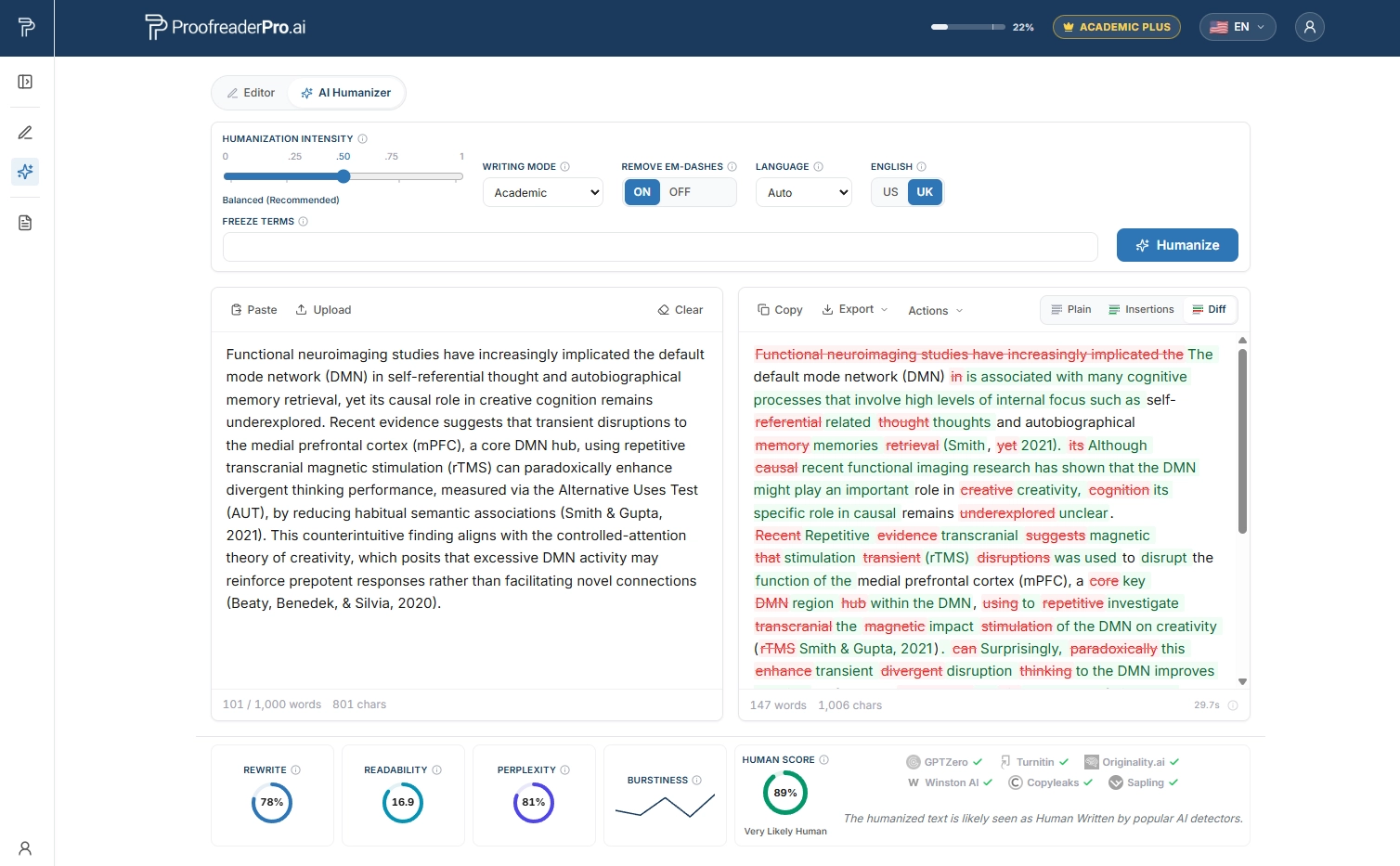
Omijanie detekcji 87% próbek uzyskało wynik poniżej 20% AI we wszystkich trzech detektorach | 4.5/5 |
Ton akademicki Obaj recenzenci uznali każdy wynik za odpowiedni do złożenia w czasopiśmie | 5/5 |
Obsługa cytowań APA, IEEE i Chicago zostały zachowane bezbłędnie, w jednym przypadku brzegowym MLA wystąpiła drobna zmiana formatowania | 5/5 |
Zachowanie terminów Terminy techniczne zachowano we wszystkich poza dwoma przypadkami | 4.5/5 |
Jakość gramatyki Ponad 96% dokładności gramatycznej po humanizacji | 5/5 |
Zbudowaliśmy to narzędzie, więc potraktuj naszą ocenę z należytą ostrożnością. Jednak liczby są rzeczywiste, a do własnego produktu zastosowaliśmy tę samą rubrykę oceny, którą zastosowaliśmy wobec konkurentów.
Kluczowy wyróżnik: nasz humanizer tekstu został wytrenowany na recenzowanych, pisanych przez ludzi pracach badawczych ze wszystkich dyscyplin akademickich, a nie na treściach internetowych. Ma dedykowany tryb Academic Mode, który traktuje cytowania, wyrażenia statystyczne i terminologię techniczną jako elementy chronione. Rozpoznaje formaty cytowań APA, MLA, Chicago, Turabian i numeryczny IEEE, zachowuje kluczowe terminy danej dyscypliny tam, gdzie je umieścisz, utrzymuje rejestr na poziomie czasopisma i eksportuje każdą zmianę do Worda jako śledzone zmiany, abyś mógł przejrzeć przeredagowanie linia po linii. Dokładność gramatyczna pozostaje powyżej 96% po humanizacji podczas testów z API LanguageTool. Większość konkurentów nie rozróżnia żadnego z tych elementów.
Gdzie narzędzie wypadło słabiej: jedna próbka w kategorii biomedycznej miała przeformułowane frazy techniczne w sposób, który nieznacznie zmienił znaczenie. Akceptowalne, a użytkownik może też łatwo przejrzeć i zmodyfikować te konkretne próbki po humanizacji.
2. Undetectable.ai: surowy wybór do omijania wykrywania w treściach ogólnych
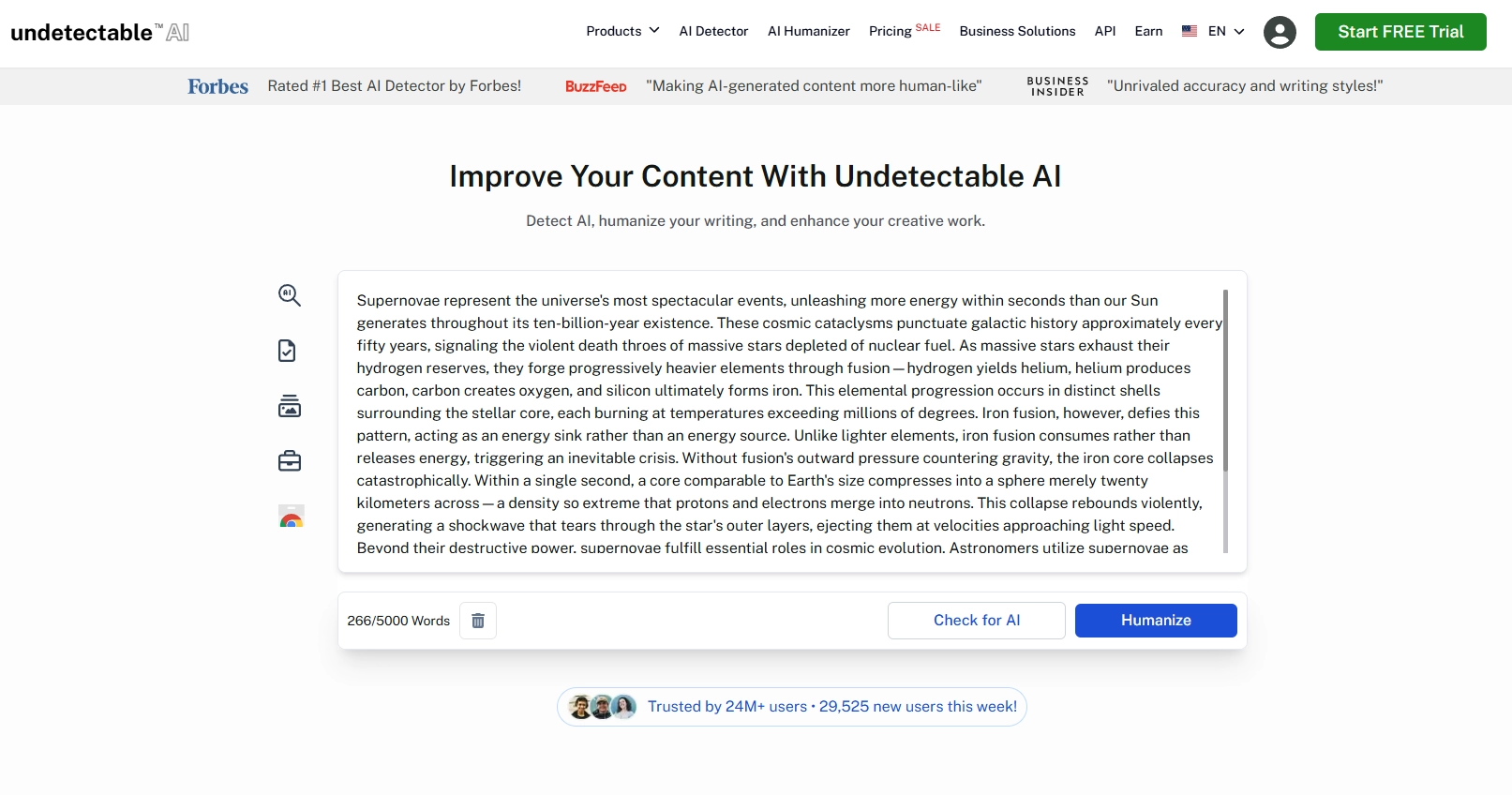
Omijanie detekcji 94% współczynnik obejścia, najwyższy w naszym teście | 5/5 |
Ton akademicki Wynik często przesuwał się w stronę nieformalnego, konwersacyjnego rejestru | 3/5 |
Obsługa cytowań Cytaty w tekście przeważnie się zachowały, odwołania w nawiasach czasem były przeformatowane | 3/5 |
Zachowanie terminów Kilka terminów technicznych zastąpiono prostszymi odpowiednikami | 3/5 |
Jakość gramatyki Poprawne gramatycznie, lecz swobodne konstrukcje wymagają edycji do użytku akademickiego | 3.5/5 |
Undetectable.ai to najskuteczniejsze czyste narzędzie do omijania wykrywania, jakie przetestowaliśmy w laboratorium. Jeśli Twoim jedynym celem jest uczynienie tekstu niewykrywalnym, wygrywa właśnie na tym jednym polu. W przypadku pisania akademickiego kompromisy są znaczące.
Największym problemem była zmiana tonu. Zwroty takie jak "the findings indicate" stawały się "we can see that" albo "this shows." To może przejść w poście na blogu. W artykule do czasopisma brzmi jak pisanie studenckie.
Jeśli pracujesz nad treściami nieakademickimi, takimi jak teksty marketingowe, wpisy blogowe czy ogólne pisanie biznesowe, Undetectable.ai jest odpowiednim wyborem z dojrzałym API. W przypadku prac naukowych kompromisy w zakresie tonu i słownictwa sprawiają, że narzędzie jest ryzykowne bez późniejszej, intensywnej ręcznej edycji. Porównujemy je szczegółowo w naszym omówieniu Undetectable AI alternative.
3. Phrasly: dobre do swobodnych szkiców, z nielimitowanym planem
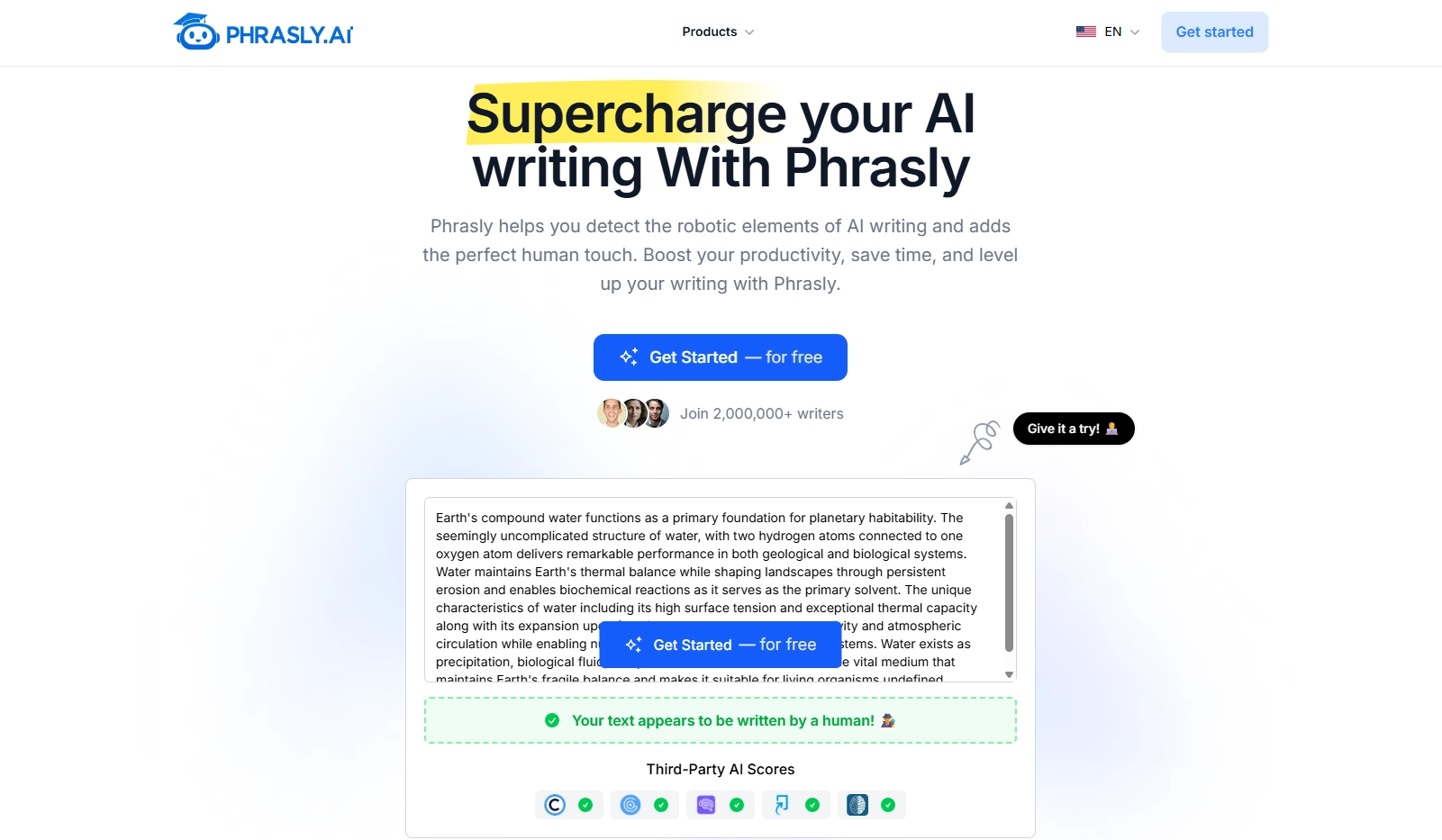
Omijanie detekcji Silne wyniki raportowane dla treści krótkich i średniej długości | 3.5/5 |
Ton akademicki Brak trybu rejestru akademickiego | 2.5/5 |
Obsługa cytowań Reklamowane, lecz nie uwzględnia stylu w sensie APA, IEEE ani Chicago | 3/5 |
Zachowanie terminów Uniwersalny silnik parafrazujący | 2.5/5 |
Jakość gramatyki Recenzje konsekwentnie wskazują na czytelny wynik | 4/5 |
Phrasly zbudowało jedną z lepszych reputacji w tej kategorii, z tysiącami pozytywnych recenzji Trustpilot oraz planem Unlimited, który usuwa lęk przed limitem słów, na którym większość konkurentów zarabia. W materiałach marketingowych pojawia się także wzmianka o zachowaniu cytowań, co na tym rynku jest rzadkością.
Co raportują recenzje: konsekwentnie czytelne wyniki przy tekstach ogólnych, przejrzysty interfejs oraz mocne rezultaty wobec popularnych detektorów w krótszych i średniej długości treściach. Plan Unlimited ogranicza pojedyncze uruchomienia do 2,500 słów, więc rozdział pracy magisterskiej czy doktorskiej nadal oznacza dzielenie dokumentu i nadzieję, że ton pozostanie spójny między fragmentami.
W przypadku pracy akademickiej braki są te same, co zwykle. Nie ma trybu rejestru akademickiego, nie ma eksportu zmian śledzonych do oceny przez promotora, a obsługa cytowań, choć reklamowana, nie uwzględnia zasad stylu w sensie APA, IEEE, Chicago. To dobry wybór do szkiców o niskiej stawce i ogólnych treści przy ograniczonym budżecie. W przypadku manuskryptu ocenianego lub składanego pozostaje narzędziem do przepisywania o ogólnym przeznaczeniu.
4. StealthGPT: odpowiedni do masowej treści ogólnej
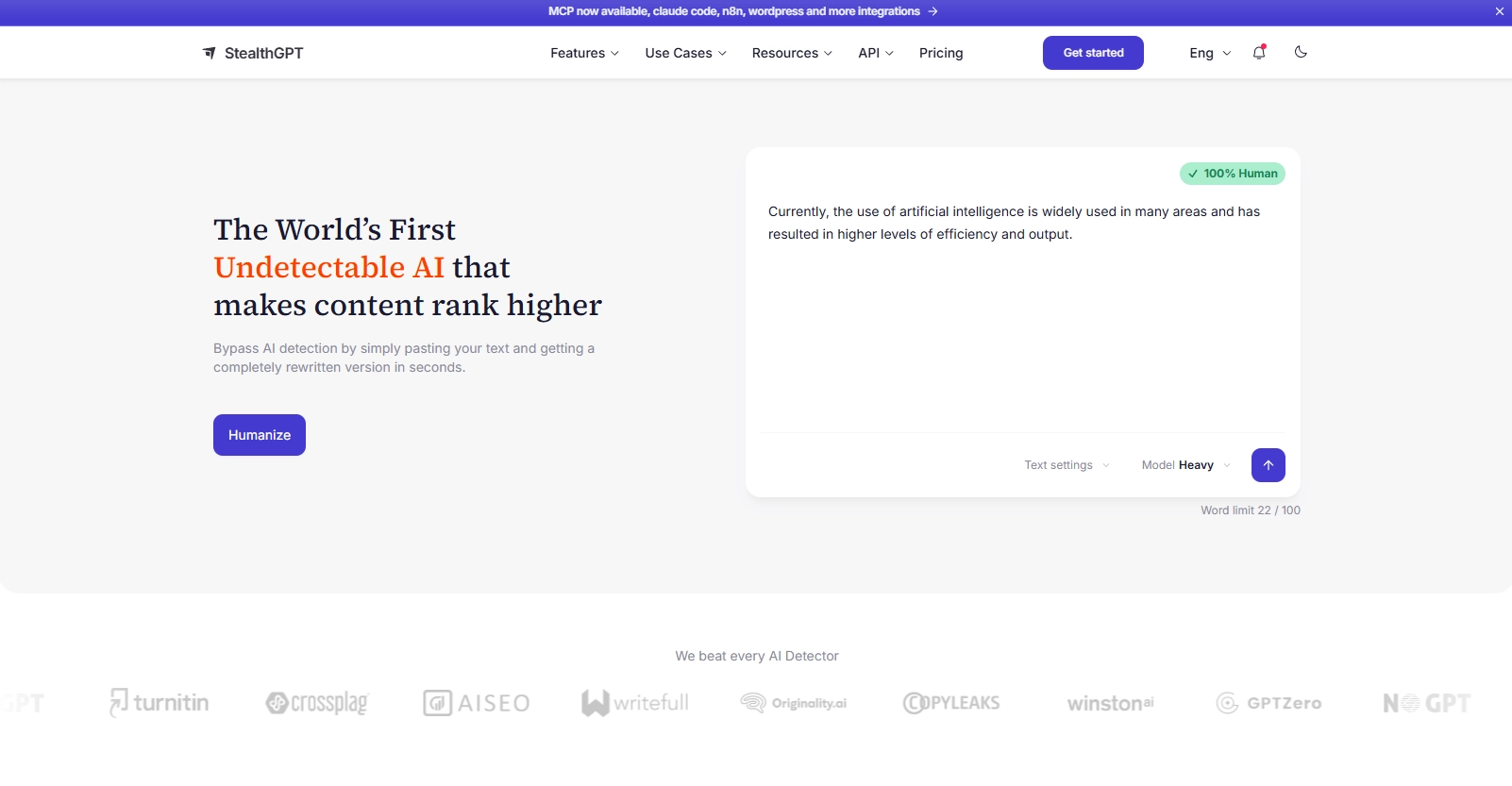
Omijanie detekcji Solidna zgłaszana skuteczność omijania w przypadku tekstów ogólnych | 3.5/5 |
Ton akademicki Brak kontroli nad tonem akademickim | 2/5 |
Obsługa cytowań Brak świadomości cytowań | 1.5/5 |
Zachowanie terminów Zaprojektowane do masowej treści ogólnej, a nie do słownictwa specjalistycznego | 2/5 |
Jakość gramatyki Jakość zależy od trybu i czasami wymaga dodatkowej korekty | 3/5 |
StealthGPT to jedna z najdłużej obecnych nazw w niszy bypass i sprzedaje się na zasadzie wolumenu: jego plany rozliczają liczbę żądań na dzień, a nie miesięczny limit słów, co odpowiada osobom przetwarzającym dużą ilość krótkich treści.
Co raportują recenzje: solidna skuteczność bypass na tekście ogólnym i szybkie przetwarzanie, przy jakości wyjściowej, która zależy od trybu i czasami wymaga dodatkowego czyszczenia. Żądania są ograniczone do około 1,500 słów każde, więc długie dokumenty są dzielone na części.
Dopasowanie do potrzeb akademickich jest słabe. Brakuje świadomości cytowań, kontroli tonu akademickiego, a limity na jedno żądanie działają na niekorzyść dokumentów o długości rozprawy doktorskiej. Dla zespołu contentowego przepychającego masowo wpisy blogowe przez detektor jest to rozwiązanie możliwe do użycia. Dla manuskryptu ryzyko przewyższa korzyści szybkości.
5. WriteHuman: OK, wybór ze średniej półki przy ograniczonym budżecie
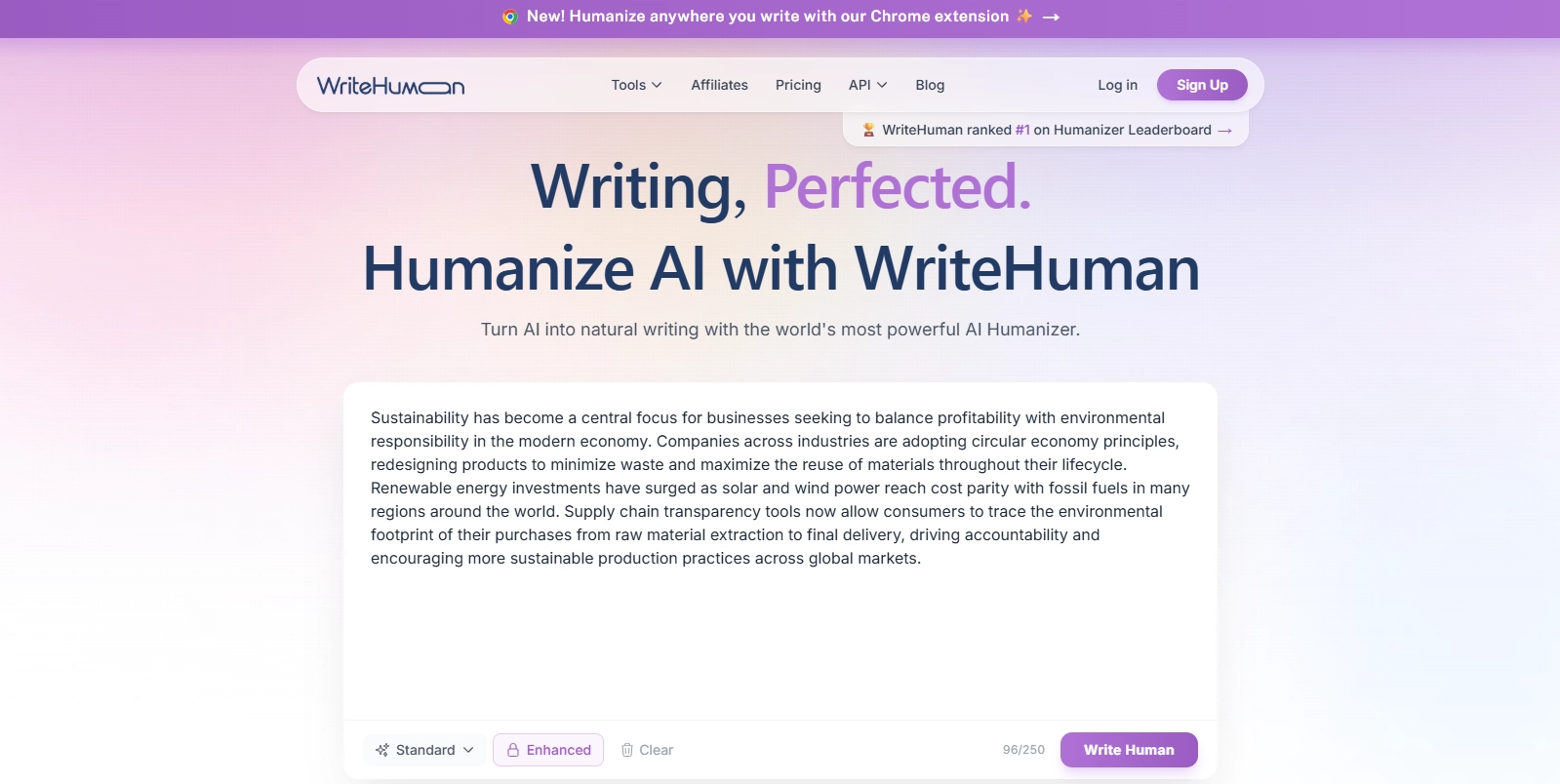
Omijanie detekcji 72% próbek przeszło w naszym teście laboratoryjnym | 3.5/5 |
Ton akademicki Rozsądne zachowanie rejestru jak na narzędzie ogólnego przeznaczenia | 3.5/5 |
Obsługa cytowań Cytowania w nawiasach często były przekształcane lub przenoszone w obrębie zdań | 2.5/5 |
Zachowanie terminów Średnia dokładność w zakresie terminologii technicznej | 3/5 |
Jakość gramatyki Brak systematycznych błędów, sporadycznie niezręczne sformułowania | 3.5/5 |
WriteHuman to opcja ze średniej półki, która nie wyróżnia się w żadnej kategorii, ale też nie ponosi katastrofalnej porażki. Obsługa cytowań była jej najsłabszą stroną w naszym teście laboratoryjnym.
Cennik jest przyjazny, od $12 miesięcznie, a do krótkich tekstów dostępny jest użyteczny darmowy plan. Limity słów na jedno żądanie, od 600 do 3,000 słów w zależności od planu, oznaczają, że cały artykuł jest przetwarzany we fragmentach, co zwiększa ryzyko niespójności w dłuższych dokumentach.
6. Walter Writes AI: odpowiedni dla agencji o dużych potrzebach wolumenowych
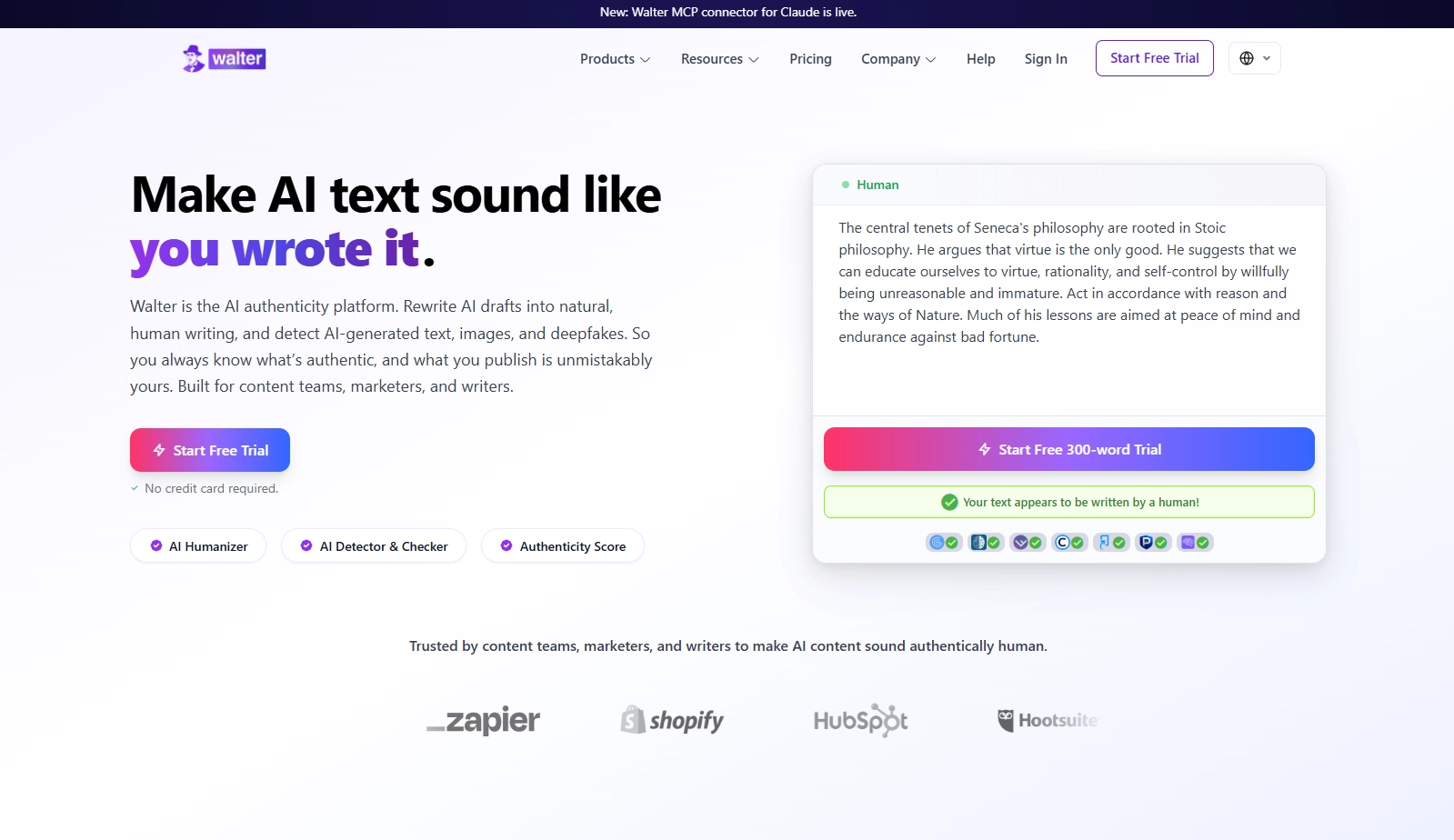
Omijanie detekcji Około 80% obejścia Turnitin w niezależnym teście na 100 próbach | 3.5/5 |
Ton akademicki Dopasowanie tonu głosu, ale brak trybu rejestru akademickiego | 2.5/5 |
Obsługa cytowań Brak zachowania cytowań | 1.5/5 |
Zachowanie terminów Ogólne przepisywanie tekstu | 2.5/5 |
Jakość gramatyki Czytelny wynik dla tekstu ogólnego | 3.5/5 |
Walter Writes został pozycjonowany w segmencie premium. Ceny wejściowe zaczynają się teraz od około $49 miesięcznie za pulę 300,000 słów, a w kolejnych progach wolumenowych skalują się do milionów słów, co sytuuję go jako narzędzie dla agencji i przedsiębiorstw, a nie zakup dla studenta czy badacza.
Co wynika z recenzji: podejście do dopasowywania stylu głosu jest naprawdę interesujące, wynikowy tekst ogólny jest czytelny, a skuteczność omijania detekcji była testowana dobrze w niektórych niezależnych próbach i niespójnie w innych. Niezależny test 100 próbek wykazał około 80% skuteczności w omijaniu Turnitin, mimo mocniejszych deklaracji marketingowych narzędzia.
Nie ma trybu akademickiego, nie ma zachowania cytowań i nie ma eksportu ze śledzeniem zmian. Jeśli prowadzisz operację contentową o dużej skali, warto się temu przyjrzeć. W przypadku pisania akademickiego zarówno cena, jak i zestaw funkcji wskazują gdzie indziej.
7. QuillBot Humanizer: OK dla użytkowników pakietu, słaby wobec Turnitin
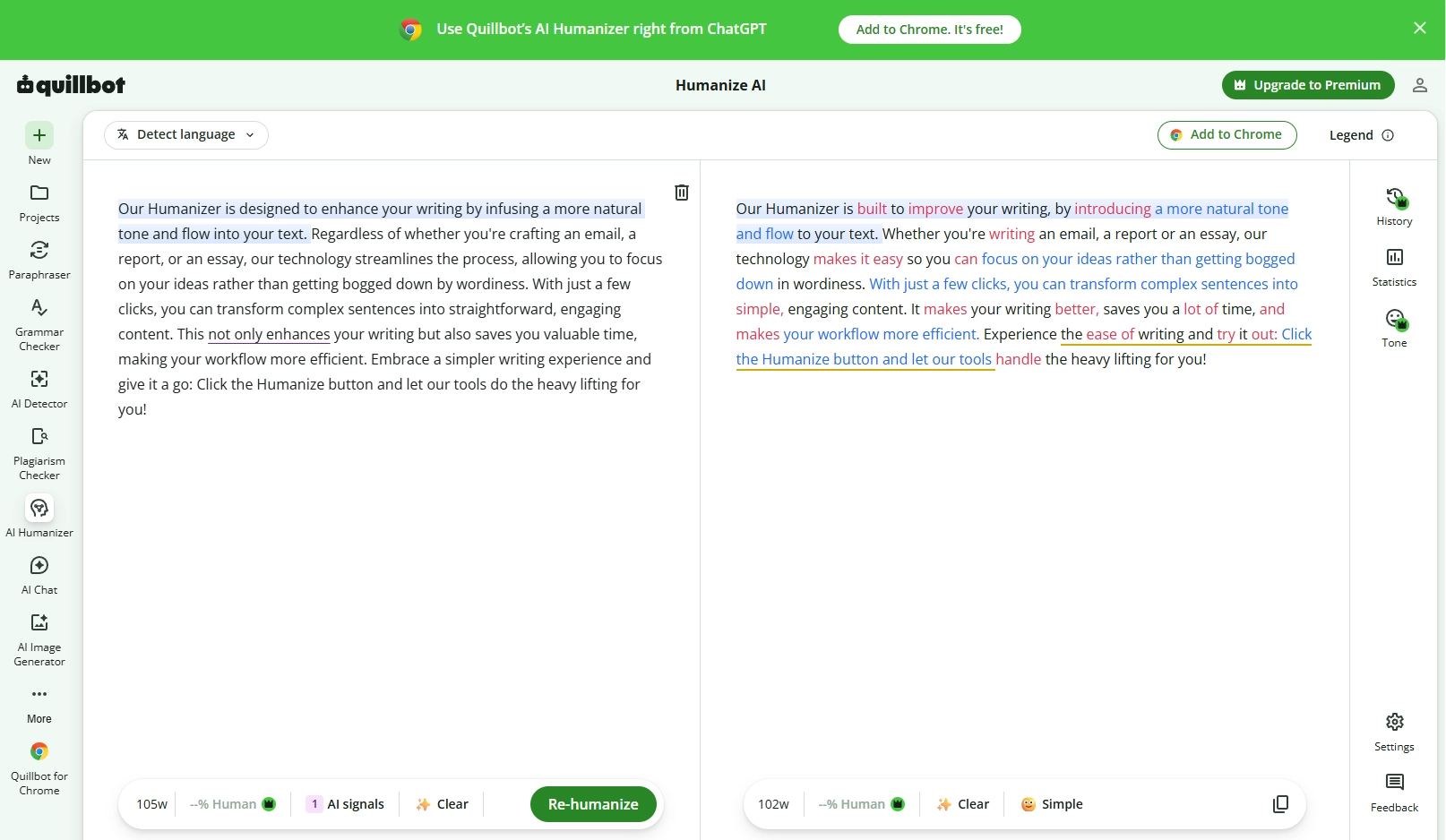
Omijanie detekcji Niezależne testy pokazują, że nie przechodzi Turnitin | 1.5/5 |
Ton akademicki Wygładzone, ale o ogólnym rejestrze | 3/5 |
Obsługa cytowań Niezawodne w fragmentach o dużym zagęszczeniu cytowań | 2/5 |
Zachowanie terminów Zamiana synonimów może naruszać terminy techniczne | 2.5/5 |
Jakość gramatyki Pod spodem działa dopracowany silnik parafrazujący | 4/5 |
Humanizer QuillBot trafia do dopracowanego pakietu, z którego wielu studentów już korzysta i któremu ufa. Jeśli i tak masz QuillBot Premium do parafrazowania i streszczania, humanizer jest w praktyce dołączony do narzędzia, za które już płacisz.
Problem ma charakter architektoniczny. Jest zbudowany na silniku parafrazującym, więc zamienia synonimy i przestawia zdania, nie zmieniając głębszych wzorców statystycznych, które mierzą detektory. Niezależne testy pokazują, że nie przechodzi Turnitin, a Turnitin wprost klasyfikuje parafrazowane treści AI jako wygenerowane przez AI. Intensywne użycie ma tendencję do podnoszenia, a nie obniżania wyników AI w tekstach akademickich, a obsługa cytowań jest zawodna w fragmentach gęstych od przypisów.
Nadaje się jako wygodne rozwiązanie dla obecnych subskrybentów QuillBot pracujących nad tekstami o nieformalnym charakterze. Nie jest poważną opcją dla pracy ocenianej przez Turnitin.
8. HIX Bypass: agresywne przepisywanie kosztem tonu
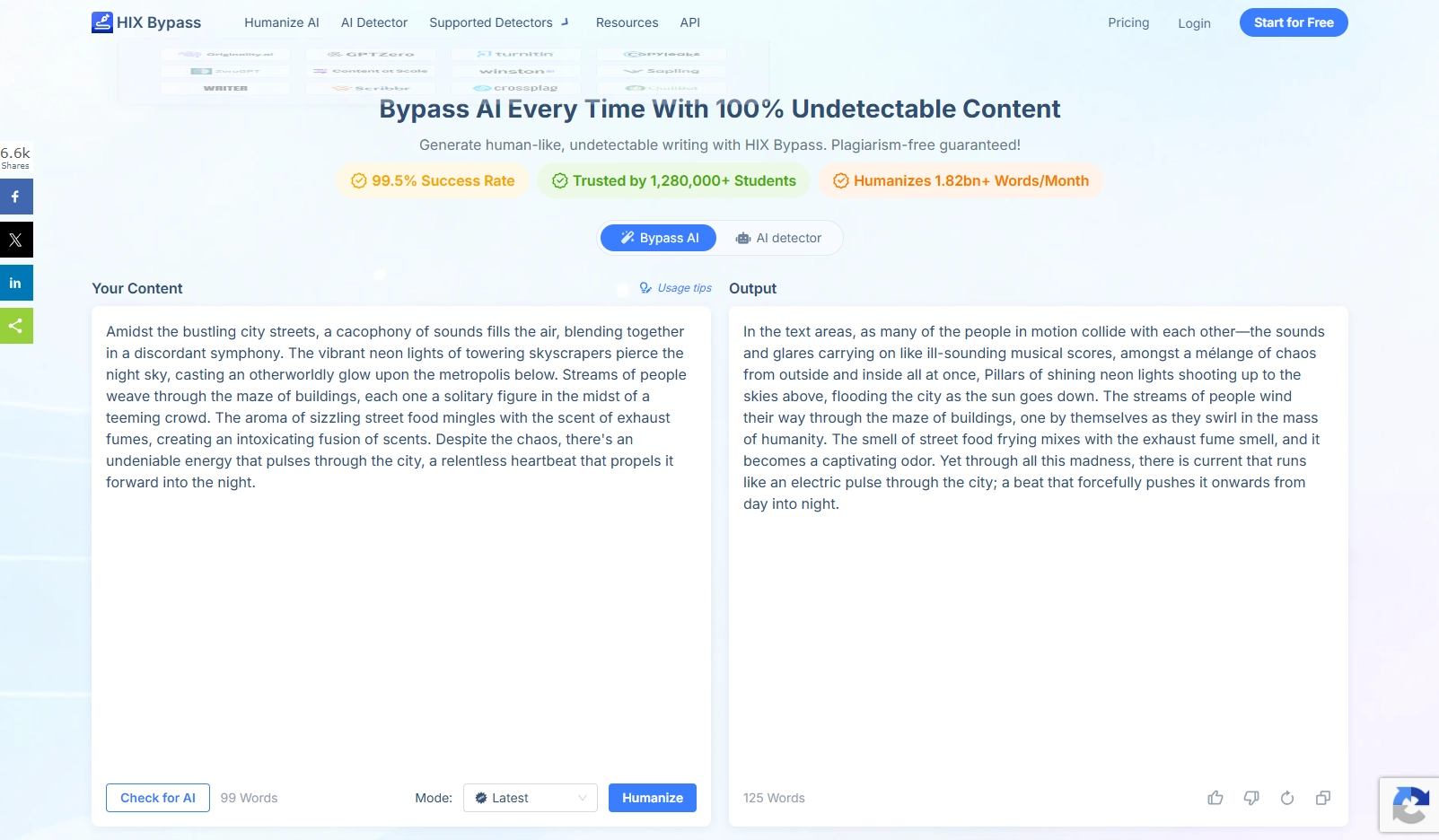
Omijanie detekcji 78% wskaźnik obejścia w naszym teście laboratoryjnym | 4/5 |
Ton akademicki Wiele wyników brzmi jak dziennikarstwo naukowe | 2/5 |
Obsługa cytowań Nie uwzględnia cytowań | 2/5 |
Zachowanie terminów Słownictwo techniczne jest często upraszczane | 3/5 |
Jakość gramatyki Najsilniejszy tryb generuje najbardziej surowy styl prozy | 3/5 |
Agresywne przepisywanie osiągnęło ten poziom obejścia kosztem akademickiego tonu. Wiele wyników brzmiało bardziej jak dziennikarstwo popularnonaukowe niż prace badawcze. Terminologia techniczna była często upraszczana, dlatego nie rekomendujemy tego narzędzia do tekstów na poziomie manuskryptu.
Jego cztery tryby przepisywania wymieniają jakość na siłę obejścia, a najsilniejszy tryb produkuje najbardziej surową prozę. Plany zaczynają się od około $14.99 miesięcznie za skromny limit słów. Do ogólnych treści internetowych w obrębie pakietu HIX jest to rozwiązanie wystarczające. W przypadku tekstów naukowych utrata rejestru dyskwalifikuje to narzędzie.
9. BypassGPT: opcja budżetowa z ciasnymi limitami
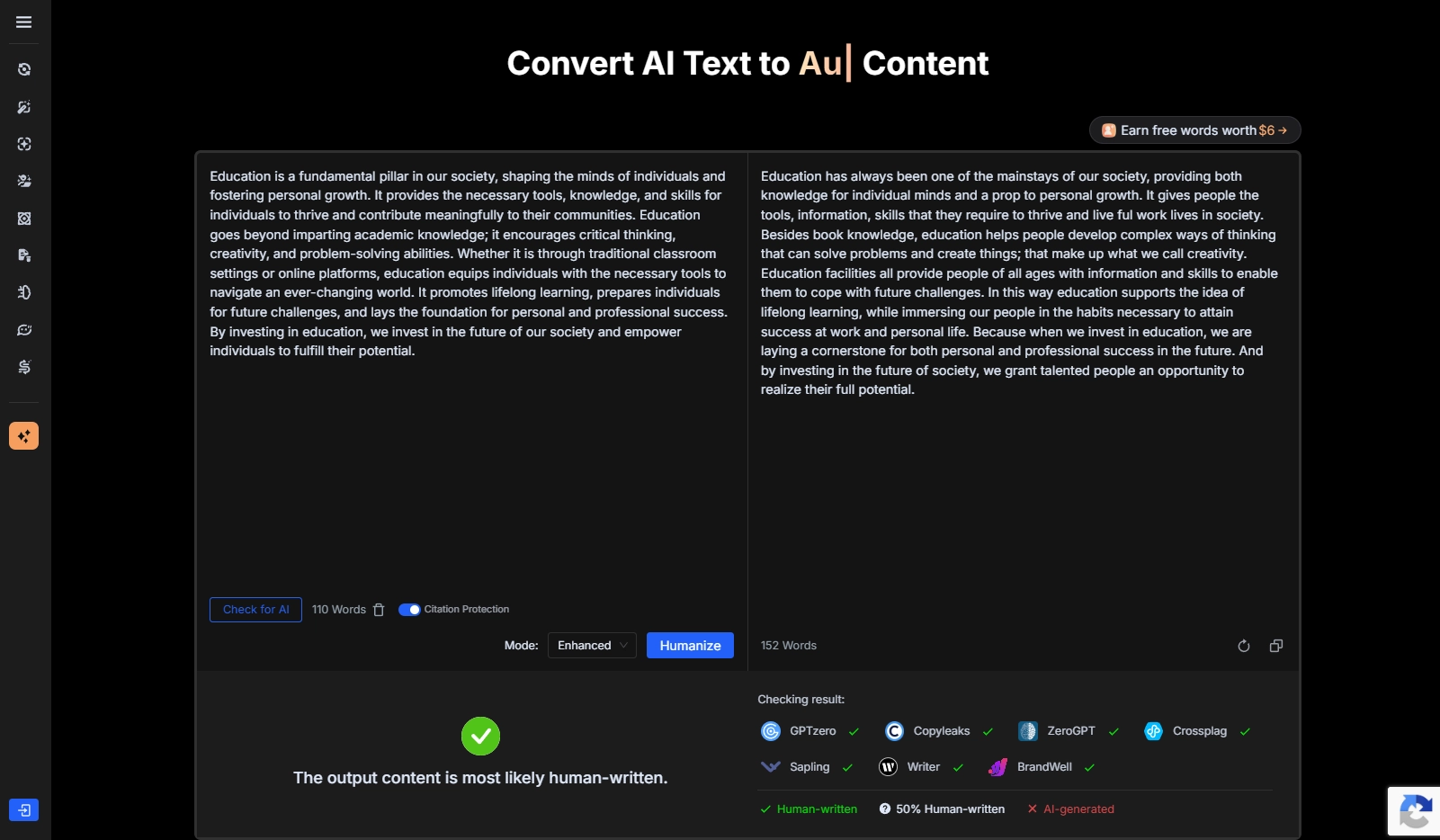
Omijanie detekcji Umiarkowana deklarowana skuteczność w przypadku tekstu ogólnego | 3/5 |
Ton akademicki Brak kontroli rejestru akademickiego | 2/5 |
Obsługa cytowań Istnieje przełącznik ochrony, ale nie uwzględnia on stylu | 2/5 |
Zachowanie terminów Jakość spada w przypadku fragmentów technicznych | 2/5 |
Jakość gramatyki Akceptowalne rezultaty w tekstach o charakterze swobodnym | 3/5 |
BypassGPT wygrywa ceną, z planami wejściowymi około $12 miesięcznie za miesięczny limit 5,000 słów.
Co wynika z recenzji: umiarkowana skuteczność omijania wykrywania w przypadku tekstów ogólnych, przy jakości, która spada w fragmentach technicznych. Niewielki miesięczny limit szybko znika przy dokumentach akademickich, pojedynczy rozdział rozprawy może zużyć większość z niego za jednym razem.
Brak świadomości cytowań, brak kontroli rejestru akademickiego. Wystarczające do okazjonalnego, krótkiego tekstu nieformalnego. Zbyt słabe do pisania naukowego, zarówno pod względem jakości, jak i ilości.
10. StealthWriter: przejrzysty interfejs, ryzykowna metoda
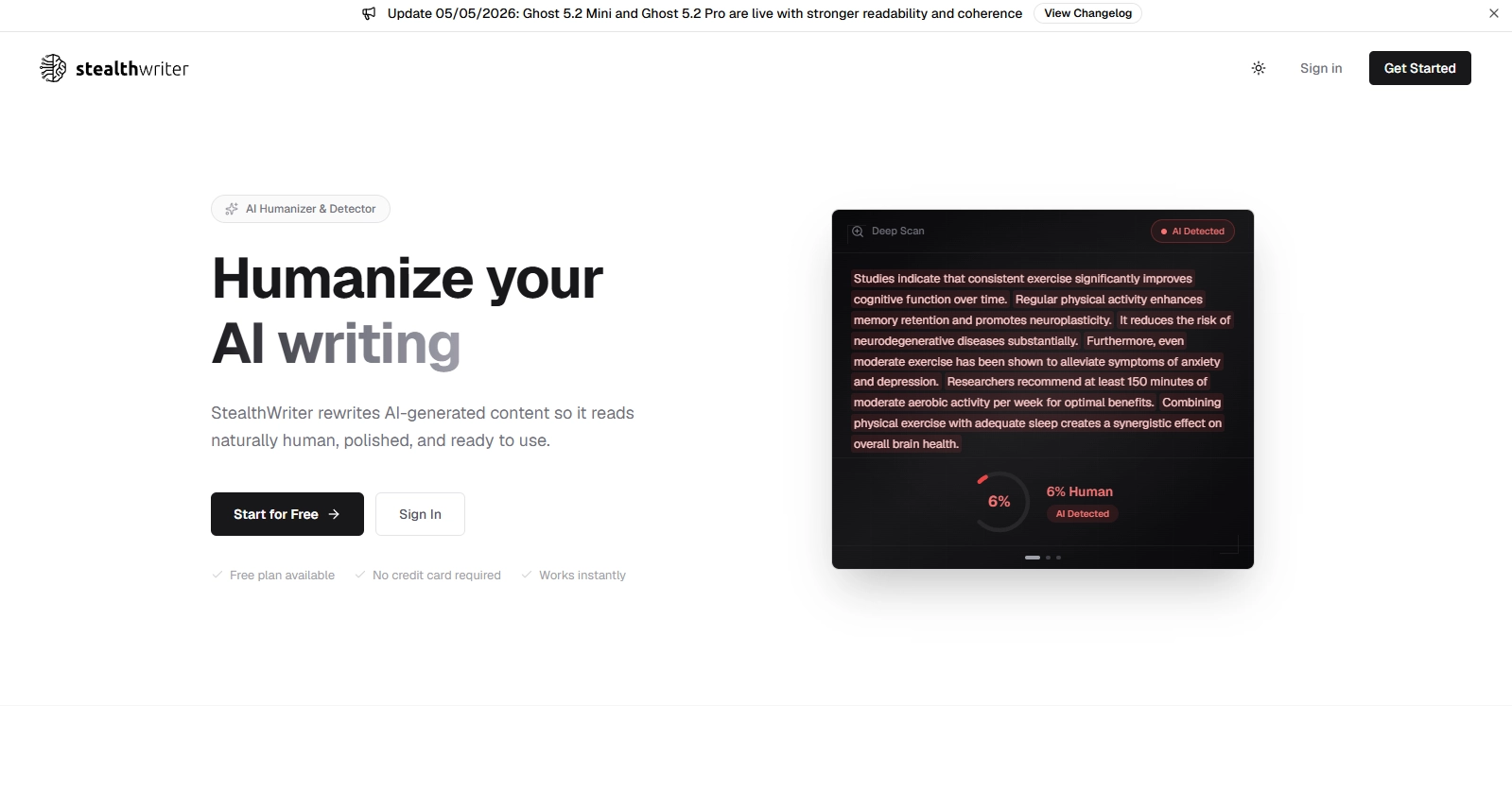
Omijanie detekcji Niezależne testy pokazują, że narzędzie ma trudności w Turnitin i Originality.ai | 2/5 |
Ton akademicki Rejestr ulega pogorszeniu przez wstawione błędy | 1.5/5 |
Obsługa cytowań Brak świadomości cytowań | 1.5/5 |
Zachowanie terminów Podmiany na poziomie zdań uderzają w terminologię | 2/5 |
Jakość gramatyki Wstawia celowe błędy, aby oszukać detektory | 1.5/5 |
StealthWriter zasługuje na uznanie za sprytny pomysł. Jego widok na poziomie zdań, kodowany kolorami, pokazuje dokładnie, co zostało zmienione, co daje większą przejrzystość niż oferuje większość narzędzi z tej listy.
Problem tkwi w metodzie. Aby oszukać detektory, wstawia celowe błędy, a te błędy niszczą czytelność, której oczekuje czytelnik akademicki, podczas gdy niezależne testy nadal pokazują, że radzi sobie słabo na Turnitin i Originality.ai. Obniżanie jakości prozy, by gonić za wynikiem, jest przeciwieństwem tego, czego potrzebuje praca naukowa, a recenzent zauważa niechlujne zdania znacznie wcześniej niż detektor. Plany zaczynają się od około $20 miesięcznie.
11. Humbot: najsłabszy w naszym teście laboratoryjnym
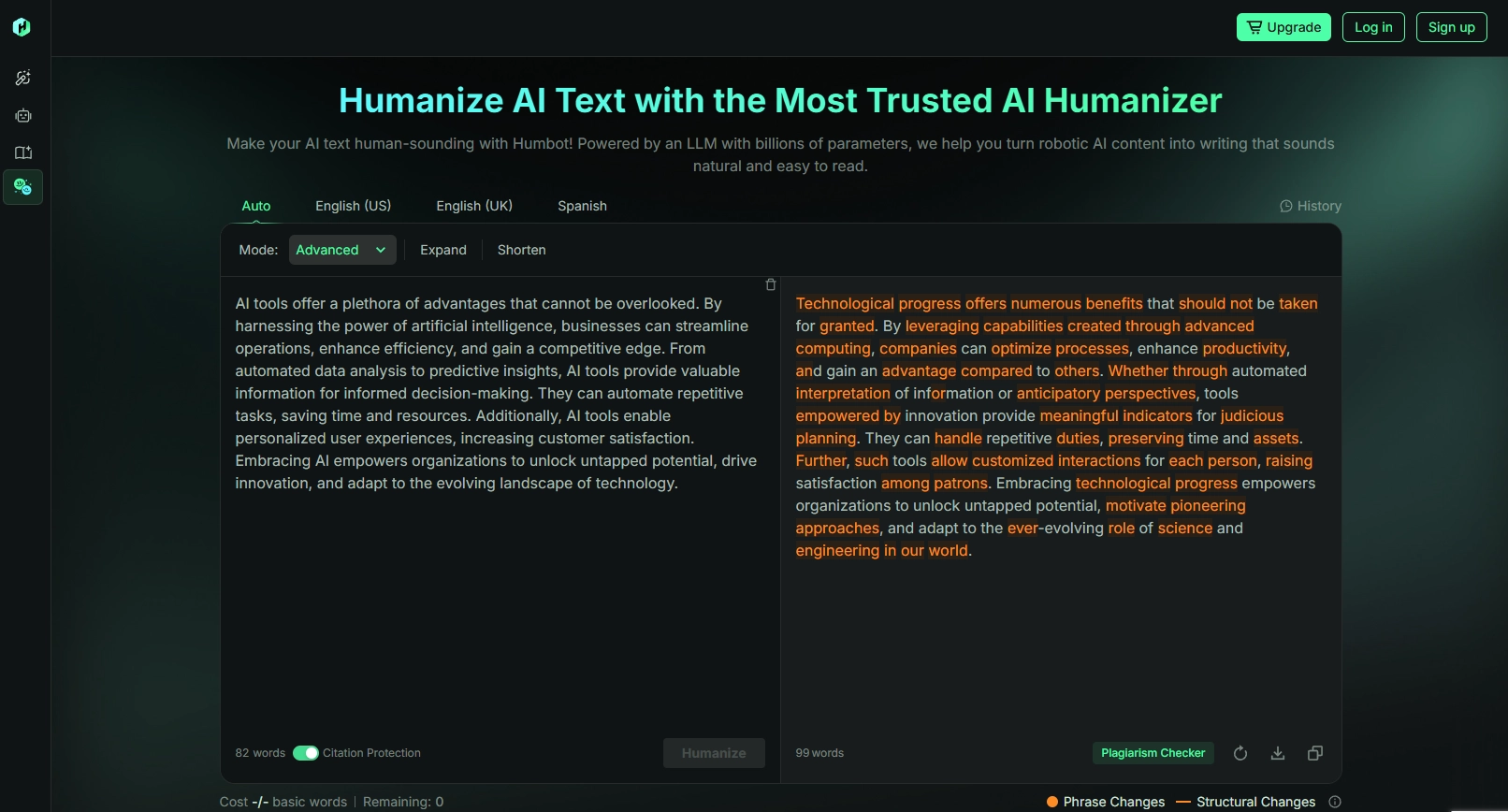
Omijanie detekcji 70% skuteczność obejścia w naszym teście laboratoryjnym | 3.5/5 |
Ton akademicki Rejestr spada poniżej poziomu wymaganego przez czasopismo | 2/5 |
Obsługa cytowań Cytowania zostały zniekształcone w 3 z 10 próbek | 2/5 |
Zachowanie terminów Sformułowania techniczne uległy pogorszeniu w kilku próbkach | 2/5 |
Jakość gramatyki Błędy gramatyczne wprowadzono w 4 z 10 próbek | 2/5 |
Wskaźniki obejścia były akceptowalne, ale jakość wyniku była niska. Użycie tego narzędzia wygenerowałoby więcej pracy redakcyjnej, niż jej oszczędzi.
Cena początkowa wynosi około $12 miesięcznie. W przypadku każdego tekstu, w którym liczy się jakość, koszt poprawek niweluje niską cenę.
12. Grubby AI: tylko krótkie, swobodne teksty
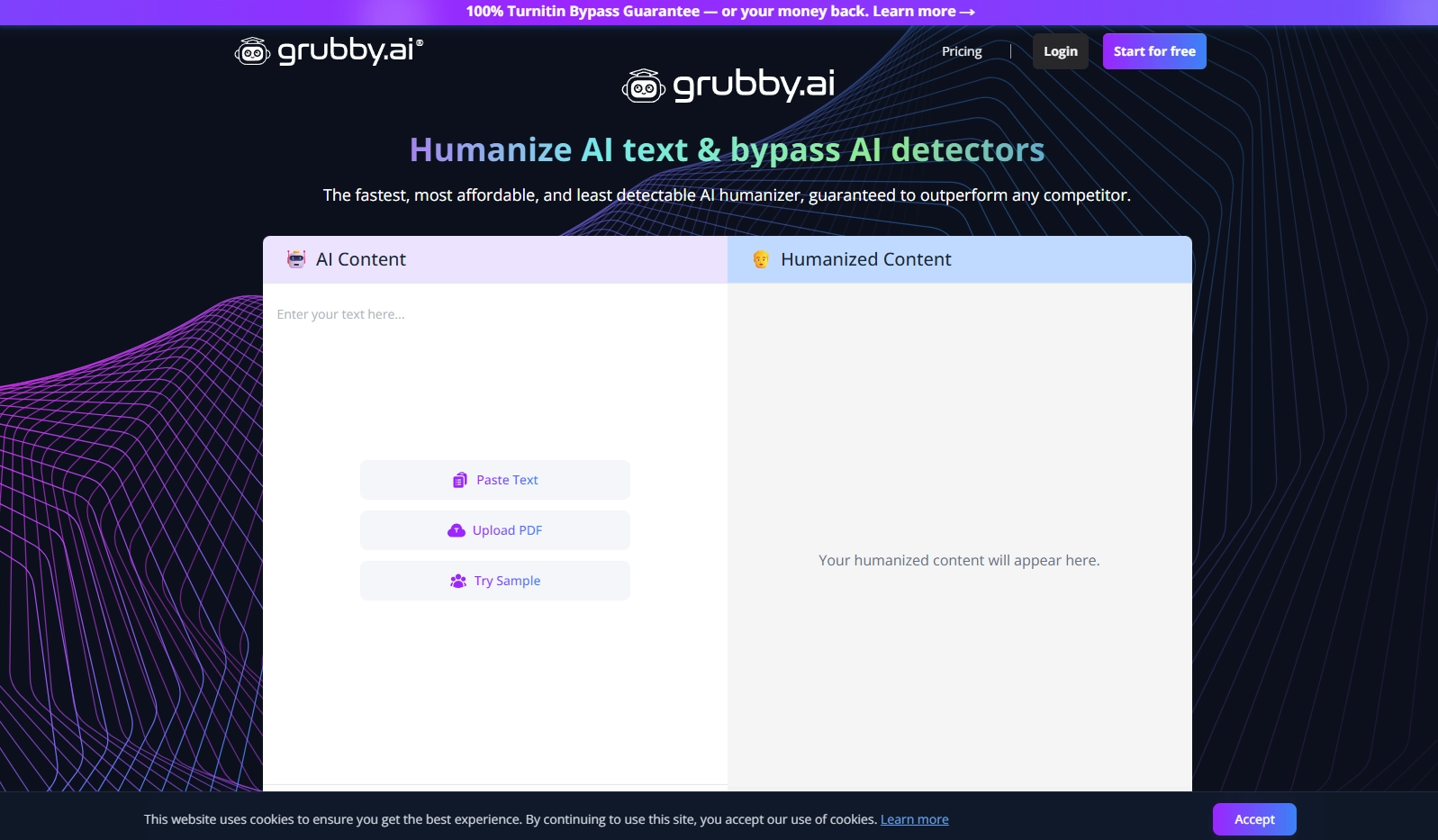
Omijanie detekcji Niespójne wyniki raportowane dla dłuższych tekstów | 2.5/5 |
Ton akademicki Wyłącznie swobodny styl outputu | 1.5/5 |
Obsługa cytowań Brak jakiejkolwiek obsługi cytowań | 1.5/5 |
Zachowanie terminów Nie jest przeznaczony do treści technicznych | 2/5 |
Jakość gramatyki Zadowalający przy krótkich, prostych tekstach | 3/5 |
Grubby AI to szybka, doraźna opcja na rynku: wklejasz krótki tekst, dostajesz przeredagowaną wersję, przy jednych z najniższych cen w tej kategorii, od około $7 miesięcznie przy rozliczeniu rocznym, za niewielką miesięczną pulę słów.
Co wynika z recenzji: rozsądne rezultaty przy krótkich, prostych tekstach i nierówna jakość przy dłuższych lub bardziej technicznych treściach. Nie ma żadnych narzędzi akademickich.
Do akapitu swobodnego tekstu jest to akceptowalna opcja budżetowa. Do czegokolwiek z cytowaniami, terminologią techniczną albo oceną, nie jest to narzędzie stworzone do tego zadania.
Pełne porównanie
| Tool | Academic tone | Citation handling | Long-document fit |
|---|---|---|---|
| ProofreaderPro.ai | Przeszkolony pod kątem rejestru akademickiego | APA, MLA, Chicago, IEEE, Turabian preserved | Full documents, tracked-changes export |
| Undetectable.ai | Zmienia na konwersacyjny | Occasionally reformatted | Good caps, no tracked changes |
| Phrasly | General register | Advertised, but not style-aware | 2,500 words per run |
| StealthGPT | General register | Not citation-aware | 1,500 words per request |
| WriteHuman | Reasonable | Frequently restructured | 600–3,000 words per request |
| Walter Writes AI | General register | Not citation-aware | Large volume pools |
| QuillBot Humanizer | Dopieszczony, ale ogólny | Unreliable when citation-dense | Suite limits |
| HIX Bypass | Upraszcza rejestr | Not citation-aware | Small word pools at entry |
| BypassGPT | General register | Not citation-aware | 5,000 words per month at entry |
| StealthWriter | Degraded by inserted errors | Not citation-aware | Word caps by plan |
| Humbot | Errors introduced | Mangled in our test | Volume tiers exist |
| Grubby AI | Tylko swobodny | Not citation-aware | Krótkie teksty |
Porównanie cen
Tylko plany płatne, wraz z miesięcznym limitem słów, jeśli dany dostawca go publikuje. Ceny dotyczą rozliczenia miesięcznego na sierpień 2026, o ile nie zaznaczono inaczej, większość dostawców oferuje duże zniżki przy rozliczeniu rocznym. Przed zakupem sprawdź stronę z cennikiem dostawcy, ponieważ oferty te często się zmieniają.
| Tool | Entry paid plan | Monthly words | Higher tiers |
|---|---|---|---|
| ProofreaderPro.ai | Academic, $19/mo | 25,000 | Academic Plus, $29/mo, 50,000 words |
| Undetectable.ai | About $10/mo (about $5/mo annual) | 10,000 | Up to 50,000 words tiers |
| Phrasly | Unlimited, about $17/mo (about $11/mo annual) | Not metered, 2,500-word runs | Single plan |
| StealthGPT | About $30/mo | Metered per request, about 1,500 words each | Higher-volume tiers to about $100/mo |
| WriteHuman | Basic, $12/mo | About 48,000 (80 runs x 600 words) | Pro $18/mo, Ultra $36/mo unlimited runs |
| Walter Writes AI | About $49/mo | 300,000 | Volume tiers into millions of words |
| QuillBot Premium | $19.95/mo (about $8.33/mo annual) | Humanizer included in Premium | Single plan |
| HIX Bypass | Basic, $14.99/mo | 5,000 | Pro $29.99/mo 50,000; Unlimited $59.99/mo |
| BypassGPT | About $12/mo | 5,000 | Higher tiers available |
| StealthWriter | Basic, $20/mo | Metered per request, 400 words each | Standard $35/mo 50,000 words; Premium $50/mo |
| Humbot | About $12/mo | Small pool at entry, tiers vary | Volume tiers available |
| Grubby AI | About $7/mo (annual) | About 7,500 | Pro about $9/mo, 30,000 words |
Wszystkie 12 wyników humanizerów w porównaniu
Każde narzędzie powyżej otrzymuje ocenę według tych samych pięciu kryteriów akademickich: omijanie detekcji, ton akademicki, obsługa cytowań, zachowanie kluczowych terminów oraz jakość gramatyki. Narzędzia testowane laboratoryjnie mają wyniki mierzone w naszym benchmarku z 10 próbek. Pozostałe mają wyniki ocenione na podstawie udokumentowanego działania, opublikowanych planów i niezależnych raportów z testów. Posortowane według wyniku łącznego:
| Narzędzie | Omijanie | Ton | Cytowania | Kluczowe terminy | Gramatyka | Łącznie |
|---|---|---|---|---|---|---|
| ProofreaderPro.ai | 4.5 | 5 | 5 | 4.5 | 5 | 24 / 25 |
| Undetectable.ai | 5 | 3 | 3 | 3 | 3.5 | 17.5 / 25 |
| WriteHuman | 3.5 | 3.5 | 2.5 | 3 | 3.5 | 16 / 25 |
| Phrasly | 3.5 | 2.5 | 3 | 2.5 | 4 | 15.5 / 25 |
| HIX Bypass | 4 | 2 | 2 | 3 | 3 | 14 / 25 |
| Walter Writes AI | 3.5 | 2.5 | 1.5 | 2.5 | 3.5 | 13.5 / 25 |
| QuillBot Humanizer | 1.5 | 3 | 2 | 2.5 | 4 | 13 / 25 |
| StealthGPT | 3.5 | 2 | 1.5 | 2 | 3 | 12 / 25 |
| BypassGPT | 3 | 2 | 2 | 2 | 3 | 12 / 25 |
| Humbot | 3.5 | 2 | 2 | 2 | 2 | 11.5 / 25 |
| Grubby AI | 2.5 | 1.5 | 1.5 | 2 | 3 | 10.5 / 25 |
| StealthWriter | 2 | 1.5 | 1.5 | 2 | 1.5 | 8.5 / 25 |
Nasz werdykt
Jeśli jesteś badaczem lub studentem studiów magisterskich, pole szybko się klaruje. Jedenaście z tych dwunastu narzędzi zostało zbudowanych do treści ogólnych i widać to za każdym razem w tych samych trzech miejscach: cytowania są przesuwane albo zniekształcane, kluczowe terminy są upraszczane, a rejestr językowy przesuwa się w stronę wpisu na blogu. To dobre narzędzia do pracy, do której zostały stworzone. Ta praca nie jest Twoim manuskryptem.
W przypadku tekstu akademickiego ProofreaderPro.ai nie ma sobie równych. Został wytrenowany na recenzowanych, napisanych przez ludzi pracach badawczych, więc zachowuje cytowania APA, MLA, Chicago, Turabian i numeryczne IEEE dokładnie tam, gdzie je umieściłeś, chroni wyrażenia statystyczne i branżowe terminy kluczowe, utrzymuje dokładność gramatyczną powyżej 96%, zachowuje formalny akademicki ton podczas przeredagowywania i eksportuje wszystko do Word jako zmiany śledzone, które może przejrzeć Twój promotor. To także jedyne narzędzie na tej liście, które publikuje wyniki swojego korpusu testowego zamiast marketingowego procentu. Jeśli Twoje teksty trafiają przed czasopismo, komisję lub do portalu Turnitin, zacznij od narzędzia stworzonego do tego celu i zachowaj ogólny przeredagowywacz do mniej formalnych tekstów.
Humanizacja na poziomie akademickim
Tested against Turnitin, GPTZero, and Originality.ai. Built to preserve your citations, vocabulary, and scholarly voice.
Wypróbuj ProofreaderPro.ai za darmoJakiego poziomu humanizacji powinieneś użyć?
Nasz benchmark uruchamia każdy dokument przy dwóch ustawieniach intensywności. Kompromis jest stały. Agresywna humanizacja osiąga najwyższe wskaźniki przejścia przez detektory, do 92.33% względem Turnitin AI w najnowszym uruchomieniu, i głębiej przepisuje strukturę zdań. Zrównoważona humanizacja przechodzi nieco rzadziej, 86.0% względem Turnitin AI, i pozostaje bliżej oryginalnego brzmienia, co przyspiesza przegląd zmian śledzonych. W przypadku rozdziału pracy dyplomowej, w którym wszystkie twierdzenia zostały starannie sformułowane, zacznij od Zrównoważonej i ponownie uruchom oznaczone fragmenty na Agresywnej. W przypadku wcześniejszych wersji roboczych Agresywna oszczędza jeden cykl redakcyjny. Wierność semantyczna pozostawała powyżej 94% przy obu ustawieniach w naszych testach, więc niezależnie od wybranego poziomu zachowujesz znaczenie, zmienia się jedynie stopień modyfikacji warstwy powierzchniowej tekstu.
Najlepszy humanizer AI według zastosowania
- Prace akademickie, rozprawy i manuskrypty do czasopism: ProofreaderPro.ai, za zachowanie cytowań, słownictwa właściwego dla danej dyscypliny oraz eksport ze śledzeniem zmian. Wypróbuj go na stronie AI text humanizer page.
- Problemy specyficzne dla Turnitin: zobacz nasz dedykowany Turnitin humanizer guide, który omawia, jak działa wskaźnik AI i jakie są w praktyce wskaźniki przejścia.
- Ogólne treści internetowe i teksty marketingowe: Undetectable.ai dobrze radzi sobie z rejestrem potocznym, choć upraszcza słownictwo techniczne. Phrasly jest odpowiednią budżetową alternatywą dzięki planowi bez limitu.
- Operacje na dużych partiach treści: StealthGPT i Walter Writes AI naliczają opłaty według wolumenu, przy bardzo różnych cenach.
- Szkic, który został już oznaczony i teraz wymaga natychmiastowej poprawki: skorzystaj z naszego step-by-step guide to reducing an AI detection score.
Luka humanizacji akademickiej, której większość narzędzi nie zauważa
Podstawowy problem polega na tym, że większość AI humanizers została stworzona z myślą o content marketerach i autorach SEO. Są projektowane tak, aby wpisy na blogu i opisy produktów przechodziły przez detektory. Pisanie akademickie ma zasadniczo inne wymagania.
W wpisie na blogu zamiana „demonstrate” na „show” jest w porządku. W pracy badawczej „demonstrate” może nieść ze sobą konkretne implikacje metodologiczne, których „show” nie ma.
W treściach marketingowych przeniesienie cytatu nie ma znaczenia. W pracy akademickiej „(Smith et al., 2024)” musi pozostać dokładnie tam, gdzie umieścił je autor, ponieważ umiejscowienie cytatu w obrębie zdania wskazuje, do którego twierdzenia odnosi się przypisanie.
W treściach ogólnych swobodny rejestr jest zaletą. Jednak w manuskrypcie do czasopisma jest to powód, by odesłać tekst do poprawy.
Dlatego narzędzia zbudowane do treści ogólnych mają trudności z tekstem akademickim. Rozwiązują niewłaściwy problem. Badacz potrzebuje niewykrywalnego tekstu, który zaakceptuje recenzent, a to są dwa różne poziomy wymagań.
Aby lepiej zrozumieć, jak działa samo wykrywanie i gdzie zawodzi, zobacz nasze AI detection accuracy testing results.
Nasza rekomendacja dla badaczy
Jeśli humanizujesz akademicki tekst wspomagany przez AI, oto, co rekomendujemy na podstawie naszych testów:
W przypadku manuskryptów do czasopism i rozpraw: Użyj humanizera przeznaczonego do tekstów akademickich. Nasz text humanizer uzyskał najwyższy wynik w pisaniu naukowym. Następnie przeprowadź ręczną weryfikację, aby wychwycić wszelkie przypadki graniczne związane ze słownictwem technicznym. Potem przepuść wynik przez detector, aby zweryfikować go przed złożeniem.
W przypadku mniej krytycznego pisania akademickiego , takiego jak abstrakty konferencyjne, raporty wewnętrzne i szkice wniosków grantowych: WriteHuman lub Undetectable.ai mogą się sprawdzić, jeśli jesteś gotów później skorygować ton.
W przypadku treści nieakademickich: Undetectable.ai osiągnął najwyższy surowy wskaźnik obejścia w naszym teście laboratoryjnym i jest odpowiednim wyborem, gdy ton akademicki nie jest wymagany. Plan bez limitu w Phrasly to ekonomiczna opcja przy stałej skali.
Niezależnie od narzędzia: Zawsze sprawdzaj zhunanizowany wynik. Żadne narzędzie nie jest doskonałe. Przeczytaj tekst na głos. Sprawdź cytowania. Upewnij się, że brzmi jak coś, co sam byś napisał. Jeśli nie brzmi, edytuj go, aż tak będzie.
I zawsze łącz humanizację z odpowiednią korektą. Nasz AI proofreader wyłapuje błędy gramatyczne, które humanizacja czasem wprowadza. Aby uzyskać krok po kroku opis procesu ręcznego humanizowania tekstu akademickiego, przeczytaj nasz przewodnik o how to humanize AI text dla prac naukowych.
Dobre narzędzia sprawiają, że Twoje pisanie staje się lepsze. Najlepsze narzędzia sprawiają, że Twoje pisanie naprawdę brzmi jak Twoje.
Dalsza lektura
- Korzyści z humanizowania tekstu AI dla badaczy
- Jak unikać wykrywania AI w pisaniu akademickim
- ProofreaderPro.ai vs ChatGPT dla pisania akademickiego
Najczęściej zadawane pytania
P: Który AI humanizer działa najlepiej w przypadku prac badawczych?
Na podstawie naszych testów ProofreaderPro.ai uzyskał najwyższy wynik dla tekstów akademickich, 24 z 25 punktów. Oferował najlepsze połączenie skuteczności obejścia detekcji, zachowania tonu akademickiego i obsługi cytowań. Undetectable.ai miał wyższy surowy wskaźnik obejścia, ale uzyskał niższe wyniki w zakresie tonu i słownictwa, przez co lepiej sprawdza się w treściach ogólnych niż w manuskryptach na poziomie czasopisma. Kluczowym czynnikiem w zastosowaniach akademickich jest to, czy narzędzie zachowuje słownictwo techniczne i formatowanie cytowań, czego większość uniwersalnych humanizerów nie robi.
P: Czy darmowe AI humanizers są dobre?
Większość darmowych AI humanizers, które testowaliśmy, generuje zauważalnie gorszą jakość niż płatne alternatywy. Do częstych problemów należą uszkodzone cytowania, uproszczone słownictwo, błędy gramatyczne wprowadzone podczas przepisywania oraz niespójny ton. Niektóre darmowe narzędzia działają wystarczająco dobrze w przypadku krótkich, prostych tekstów, ale manuskrypty akademickie nie są ani krótkie, ani proste. Jeśli Twoja praca reprezentuje miesiące lub lata badań, korzystanie z darmowego narzędzia, które może wprowadzić błędy lub zniszczyć naukowy ton, oznacza problem, którym trzeba będzie zająć się później, praktycznie przepisując całą zhumanizowaną wersję. Większość płatnych narzędzi oferuje bezpłatne wersje próbne, więc warto je wykorzystać do testów przed podjęciem decyzji.
P: Czy AI humanizers potrafią zachować słownictwo akademickie?
To zależy od narzędzia. Uniwersalne humanizers często zastępują terminy techniczne prostszymi odpowiednikami, ponieważ ich dane treningowe są w przeważającej mierze nieakademickie. Humanizers przeznaczone do zastosowań akademickich, takie jak ProofreaderPro.ai, zostały zaprojektowane tak, aby rozpoznawać i chronić terminologię właściwą danej dyscyplinie, wyrażenia statystyczne oraz formaty cytowań. W naszych testach zachowanie słownictwa akademickiego mieściło się w przedziale od 65% do 95%, w zależności od narzędzia. Zawsze sprawdzaj zhumanizowany wynik pod kątem poprawności słownictwa przed wysłaniem, ponieważ nawet najlepsze narzędzia czasami niepotrzebnie parafrazują termin techniczny.
P: Jaki jest najlepszy AI humanizer do pisania akademickiego?
ProofreaderPro.ai. To jedyny humanizer w tym porównaniu stworzony specjalnie do pisania naukowego: cytowania, terminy techniczne i formalny rejestr przetrwają przepisywanie, a wynik można wyeksportować do Word jako śledzone zmiany. W naszym benchmarku obejmującym 2,000 dokumentów narzędzie to ominęło detekcję AI Turnitin w przypadku nawet 92.33% dokumentów.
P: Czy AI humanizers zachowują cytowania?
Większość nie. Uniwersalne humanizers traktują cytowania w tekście jak zwykłą prozę i przeredagowują je, co uszkadza odwołanie. Humanizers akademickie chronią ciągi cytowań podczas przepisywania. To jedno z kryteriów, które oceniamy w porównaniu powyżej.
P: Czy plan bez limitu dla humanizerów jest wart swojej ceny?
W tym przypadku wolumen nie jest główną kwestią. Lepiej zhumanizować tekst partiami i uzyskać dobrą jakość procesu niż hurtowo zhumanizować cały dokument, otrzymując niskiej jakości wynik.
P: Jak zbudowano silnik humanizera?
Silnik naszego humanizera stworzyli badacze i inżynierowie NLP z TextPulse, którzy dostroili autorski model humanizacji na naszym własnym zbiorze recenzowanych, napisanych przez ludzi prac naukowych. Powstał specjalnie z myślą o treściach naukowych: obsługa wielu języków, terminologia specyficzna dla dziedziny, cytowania w tekście, poprawna gramatyka i formalny rejestr. Silnik aktualizujemy okresowo na podstawie opinii naszych użytkowników i międzynarodowej społeczności badawczej, a to właśnie te oparte na opiniach udoskonalenia sprawiają, że pozostaje humanizerem tworzonym przede wszystkim dla nauki, a nie narzędziem ogólnego przeznaczenia trenowanym na potocznych wpisach blogowych i treściach z mediów społecznościowych.

Moe jest inżynierem NLP z PhD w przetwarzaniu języka naturalnego. Jego badania obejmują lingwistykę obliczeniową, analizę tekstu i uczenie maszynowe, a następnie zostały wykorzystane bezpośrednio w modelach edycji i humanizacji stojących za ProofreaderPro. Pisze o części procesu, której większość ludzi nigdy nie widzi: o tym, jak model językowy czyta zdanie, ocenia je i decyduje, co zmienić.