How to Reduce Your AI Detection Score: A Practical Guide for Researchers
Step-by-step guide to reduce your AI detection score below 15%. Tested methods to decrease AI percentage on GPTZero, ZeroGPT, and Copyleaks.

If you used AI models like ChatGPT, Claude, Gemini or Deepseek to assist with your research paper, your AI score would probably be high on popular AI detectors like Turnitin or GPTZero. This post guides you on how to reduce your AI detection score back to a submission ready level.
Here's the exact workflow that will reduce your AI percentage to a safe range.
The five steps at a glance
- Run your draft through two detectors and note which passages are flagged.
- Rewrite flagged passages manually in your own voice, changing structure rather than swapping words.
- Process stubborn sections with an academic humanizer that preserves citations and terminology.
- Re-check the full document with the same detectors you started with.
- Stop at a realistic target: under 15% is achievable, and 0% is unnecessary.
The sections below cover each step in detail, including what to do when human-written text gets flagged.
What your AI detection score actually measures
Before you start fixing the number, you need to understand what it means. AI detectors like Turnitin, GPTZero, Originality.ai, and Copyleaks analyze your text for statistical patterns that are common in AI-generated writing.
These patterns include low perplexity (predictable word choices), low burstiness (uniform sentence length and structure), and high consistency in paragraph rhythm. Human writing tends to be messy - varied sentence lengths, unexpected word choices, occasional tangents. AI writing tends to be smooth, even, and predictable.
Your AI detection score isn't measuring whether you used AI. It's measuring whether your text exhibits patterns that correlate with AI output. That's an important distinction, because plenty of human-written text triggers these same patterns - especially formal academic writing, which is naturally more structured and predictable than casual prose.
A third signal some detectors weigh is vocabulary distribution. Models favor words that are statistically common in their training data, while human writers have idiosyncratic vocabulary: terms they overuse, unusual words they favor, discipline-specific jargon deployed in unexpected places.
The university-grade detectors, one by one
Knowing which detector you are up against changes how you read the score. These are the tools institutions and clients actually run in 2026, what each one measures, and what counts as a safe result. Whatever the tool, treat any score as a signal for review rather than proof: in one widely cited Stanford study, mainstream detectors flagged 61% of essays by non-native English speakers as AI-written.
| Detector | Who runs it | What to know |
|---|---|---|
| Turnitin | Universities, institution-wide | Shows *% below 20%; the practical target is under 20% |
| GPTZero | Educators and students | Highlights flagged sentences; aim under 15% with no highlighted runs |
| Originality.ai | Publishers, agencies, clients | Paid-only, aggressive, updates frequently |
| Copyleaks | Universities via LMS integrations | Multi-language, published false-positive rate under 1% |
| Winston AI | Educators and content teams | OCR input handling; read the 99.98% claim as marketing |
| ZeroGPT | Students as a free first check | Scores swing widely; never conclusive on its own |
| Pangram | Academic-integrity offices | False positives at or below 0.5% in an independent study |
| Scribbr AI Detector | Students pre-submission | High-70s to mid-80s accuracy; a screen, not evidence |
| Sapling | Business and support teams | One peer-reviewed study found 90% of human samples flagged |
Turnitin
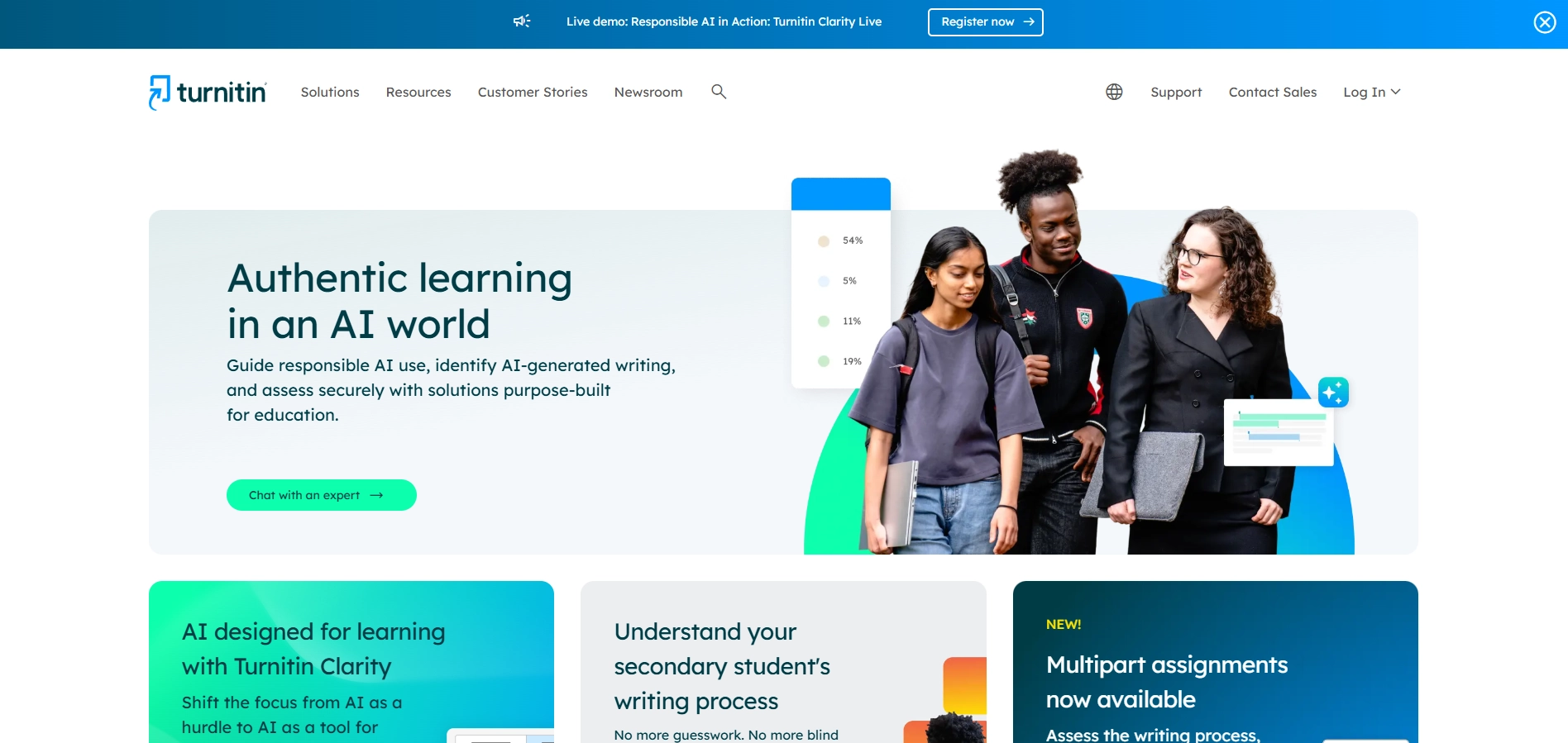
The default at universities. Turnitin's AI writing detection is built into the same platform that runs the similarity report and is licensed institution-wide, so students cannot buy access and check themselves before submission. It segments your document and scores how much of the prose reads as AI-generated, separately from the similarity score. Two display rules matter: scores of 20% and above show the percentage with sentence-level highlights, while results between 1% and 19% appear as *% with no number attributed, because Turnitin's own testing found more false positives below 20%. The practical target is to stay under 20%, below the threshold where the report shows a hard number. Several major universities have disabled the feature over false-positive concerns, and Turnitin's newer Clarity product shifts the evidence toward your drafting process. Our Turnitin Clarity explainer and Turnitin score guide cover both in detail.
GPTZero
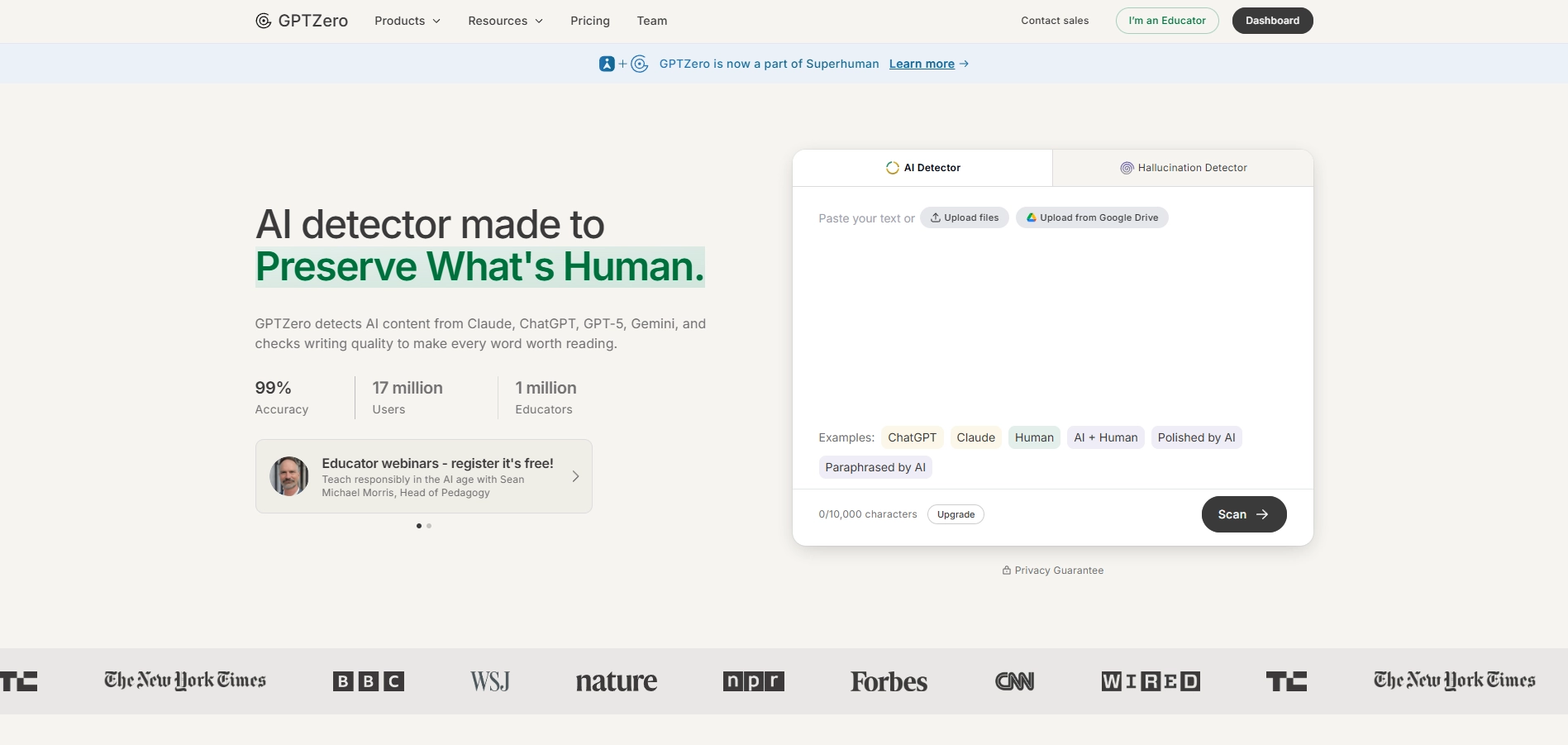
The best-known standalone detector, built for education. GPTZero measures perplexity and burstiness directly and highlights the individual sentences it considers machine-written, which makes it the most useful tool for the targeted-rewrite workflow in this guide. Teachers use its classroom dashboards; students use the free tier as a pre-check. It scores well on unedited model output in benchmark tests and weakens once text has been genuinely revised. Aim for under 15% with no highlighted runs of consecutive sentences. Our GPTZero score guide covers its quirks.
Originality.ai
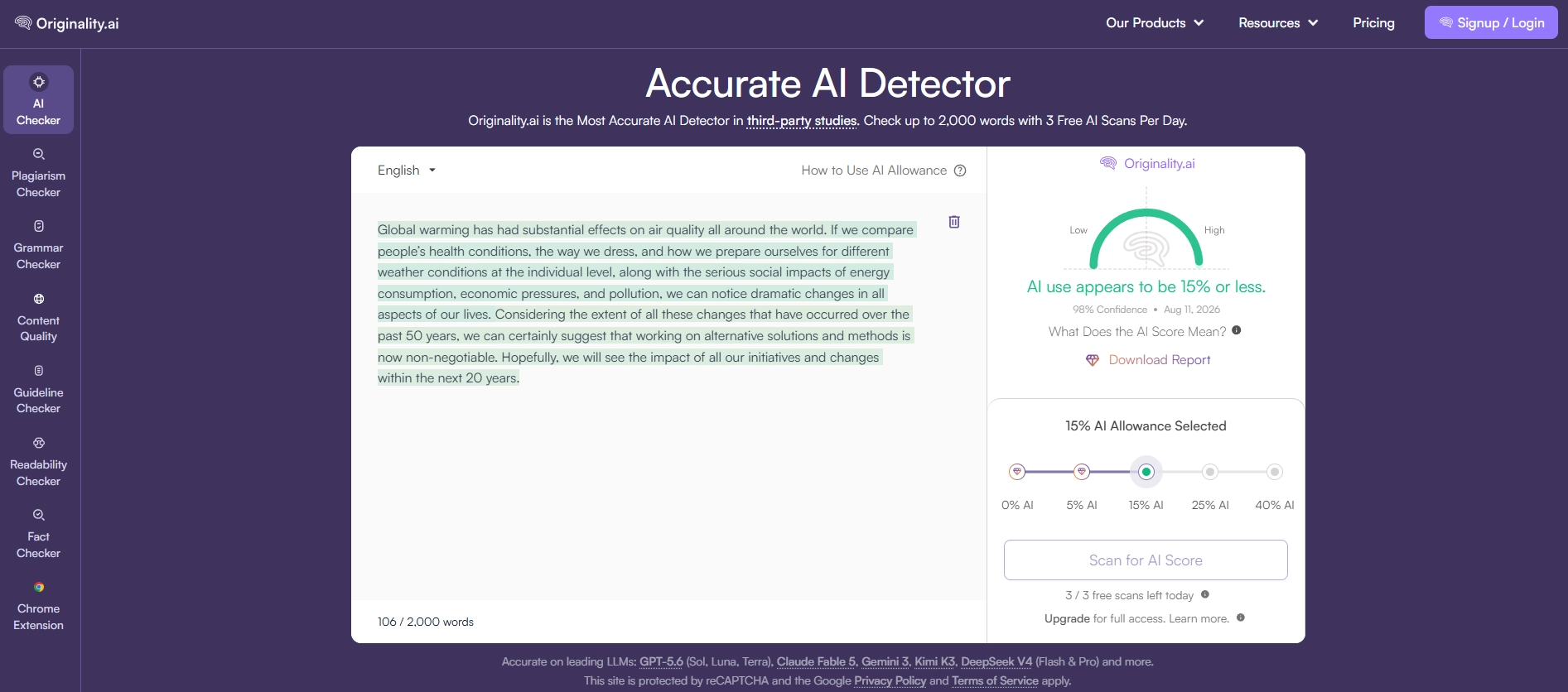
The detector of the freelance and publishing world rather than the classroom. Agencies, editors, and site owners run entire articles and websites through it, and a red score can hold up payment for working writers. It is paid-only, updates its model frequently, and leans aggressive: it catches more AI text than most competitors at the cost of more false flags on clean prose. If a client screens with it, keep your own report and aim for a clear human verdict. We cover disputes and revision tactics in the Originality.ai score guide.
Copyleaks
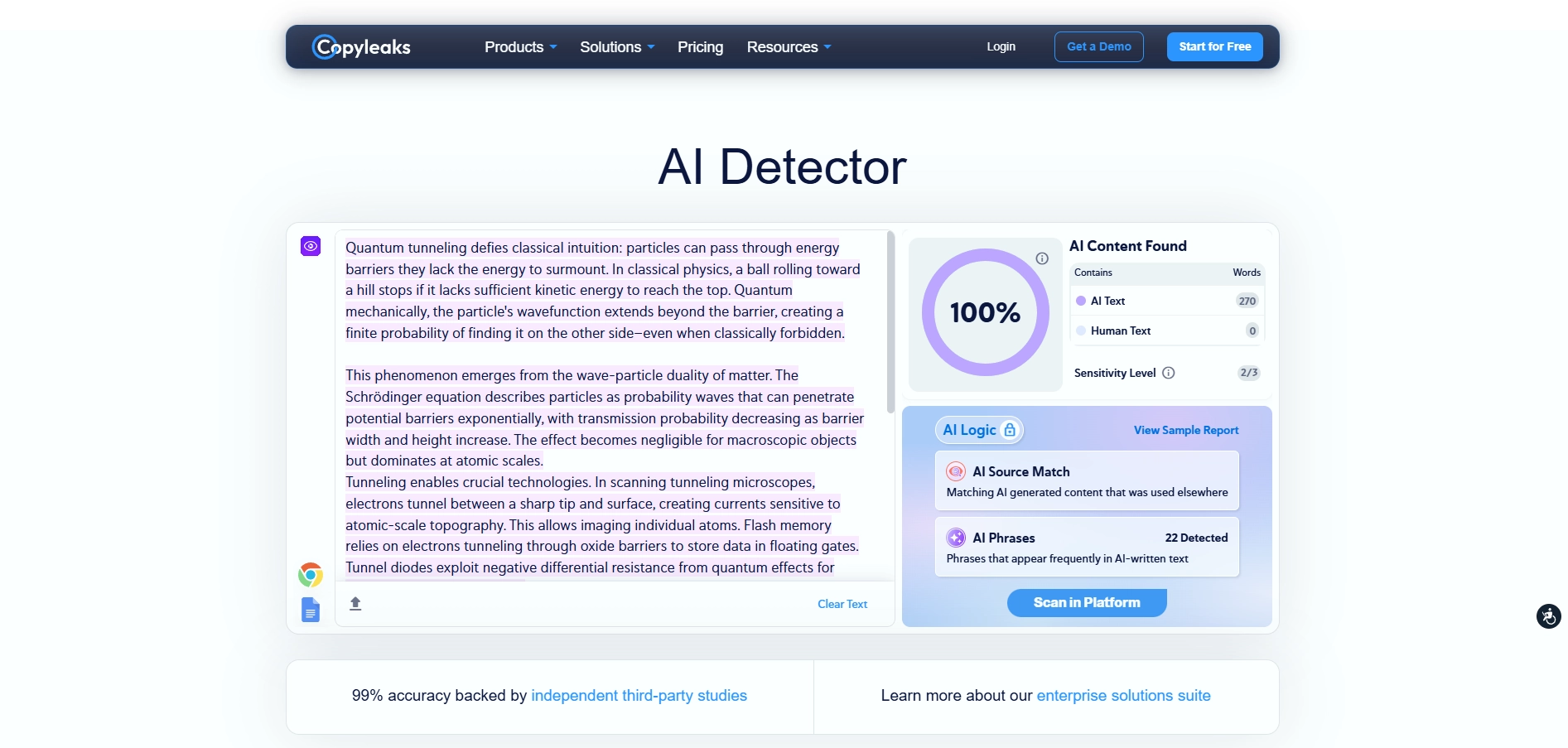
The enterprise pick. Copyleaks plugs into learning management systems like Canvas, Moodle, and Blackboard, detects across multiple languages, and offers sensitivity modes plus the compliance certifications that make procurement teams comfortable. Its published false-positive rate is under 1%, among the lowest of the mainstream tools. Universities that do not run Turnitin often run Copyleaks. Our Copyleaks explainer covers how far to trust a flag.
Winston AI
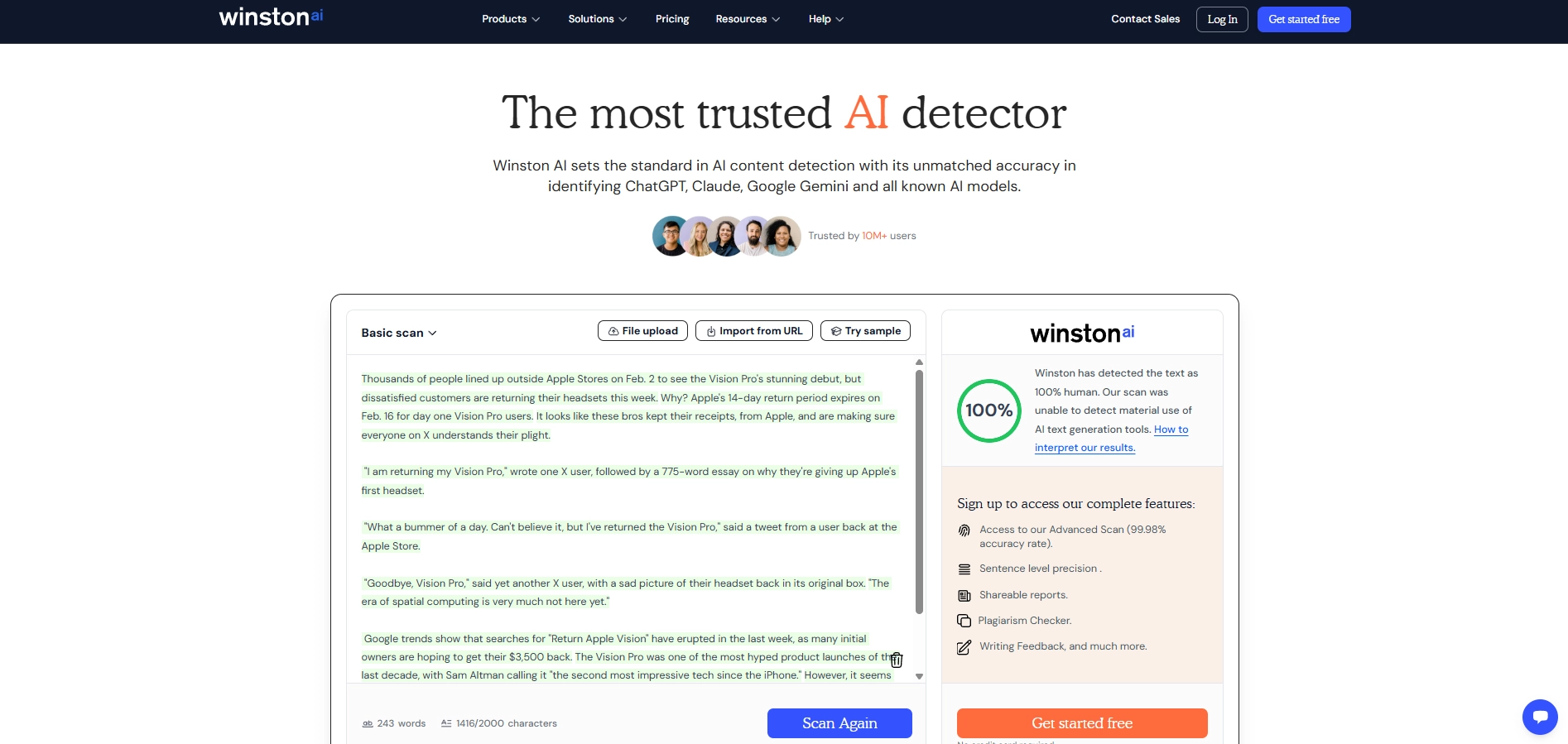
Marketed at 99.98% accuracy, a number you should read as marketing rather than measurement, since independent testing paints a more modest picture. Winston's genuine differentiator is input handling: it runs OCR, so teachers can scan handwritten or printed work and photos of documents. It sells to educators and content teams. Treat its percentage like any other single-tool result and verify against a second detector. See our Winston AI accuracy analysis.
ZeroGPT
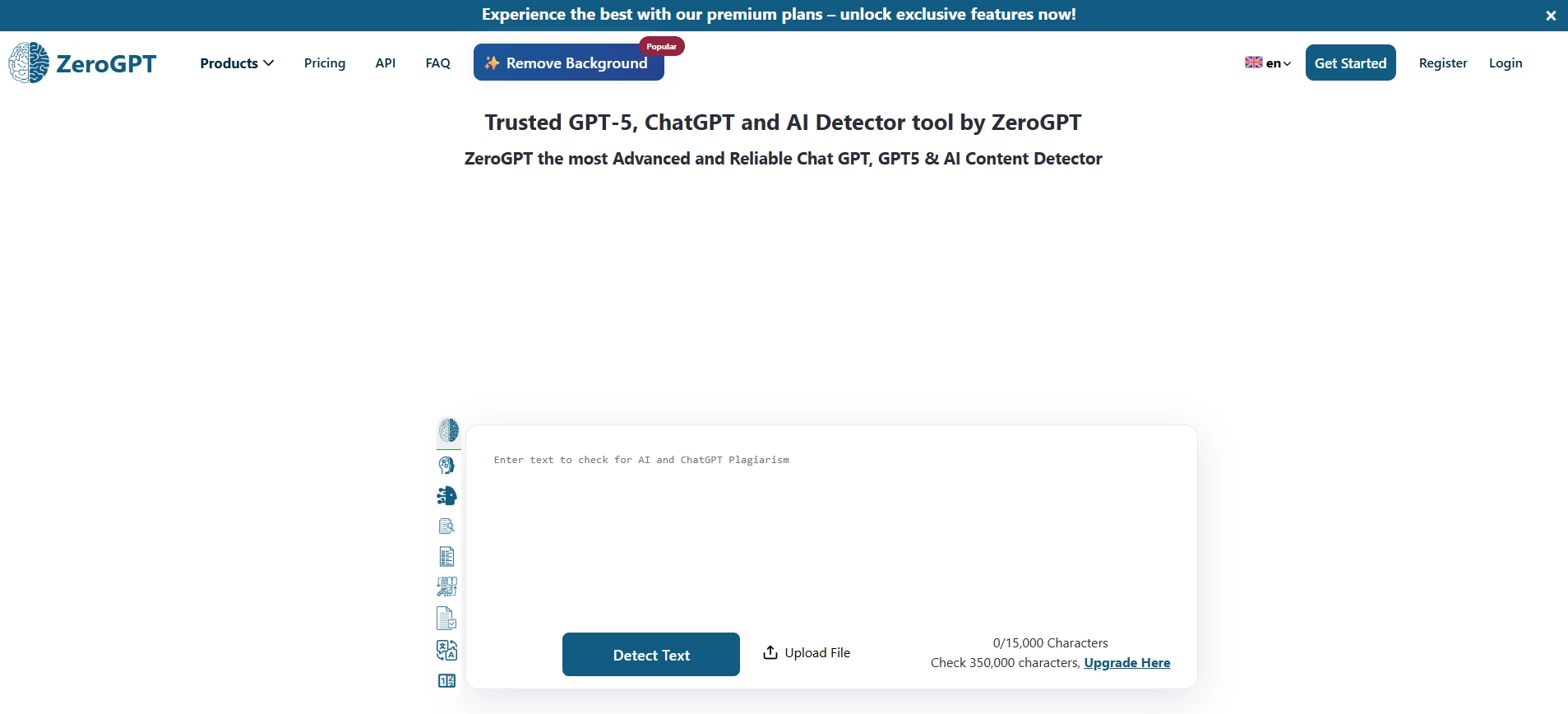
The free, no-login tool most students try first. Its scores swing widely on the same text, which makes it useful as a rough first look and nothing more. A high ZeroGPT number on writing you produced yourself is common and does not predict what Turnitin or Copyleaks will say. If ZeroGPT flags you, re-test on two better-calibrated tools before changing a word. Our ZeroGPT accuracy review explains why its numbers wander.
Pangram
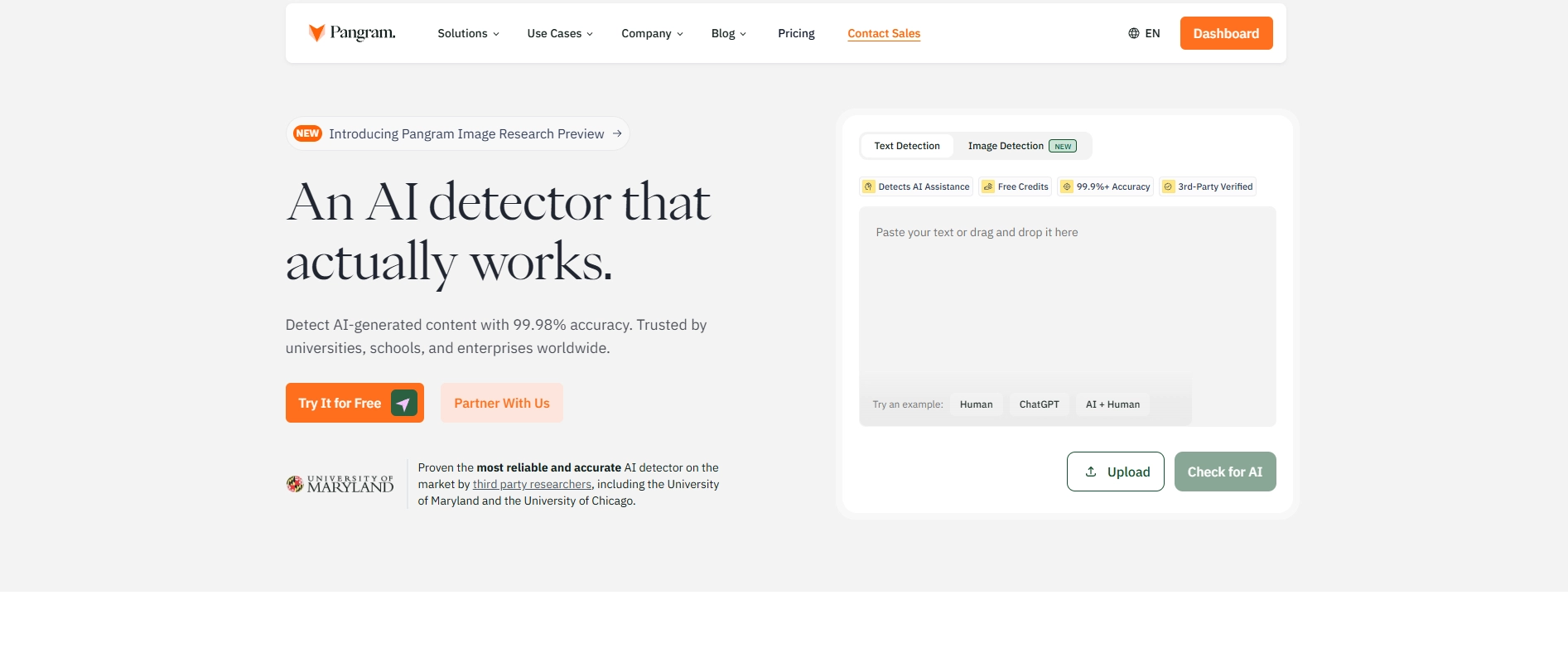
The strongest of the newer generation. In an independent University of Chicago study, Pangram was the only detector that kept false positives at or below 0.5% while still catching AI text reliably, and its accuracy holds up even after text has been run through humanizers. It is gaining ground in academic-integrity offices and editorial teams that were burned by false positives elsewhere. If your work will face Pangram, the only dependable approach is the one this guide teaches: genuine structural revision in your own voice.
Scribbr AI Detector
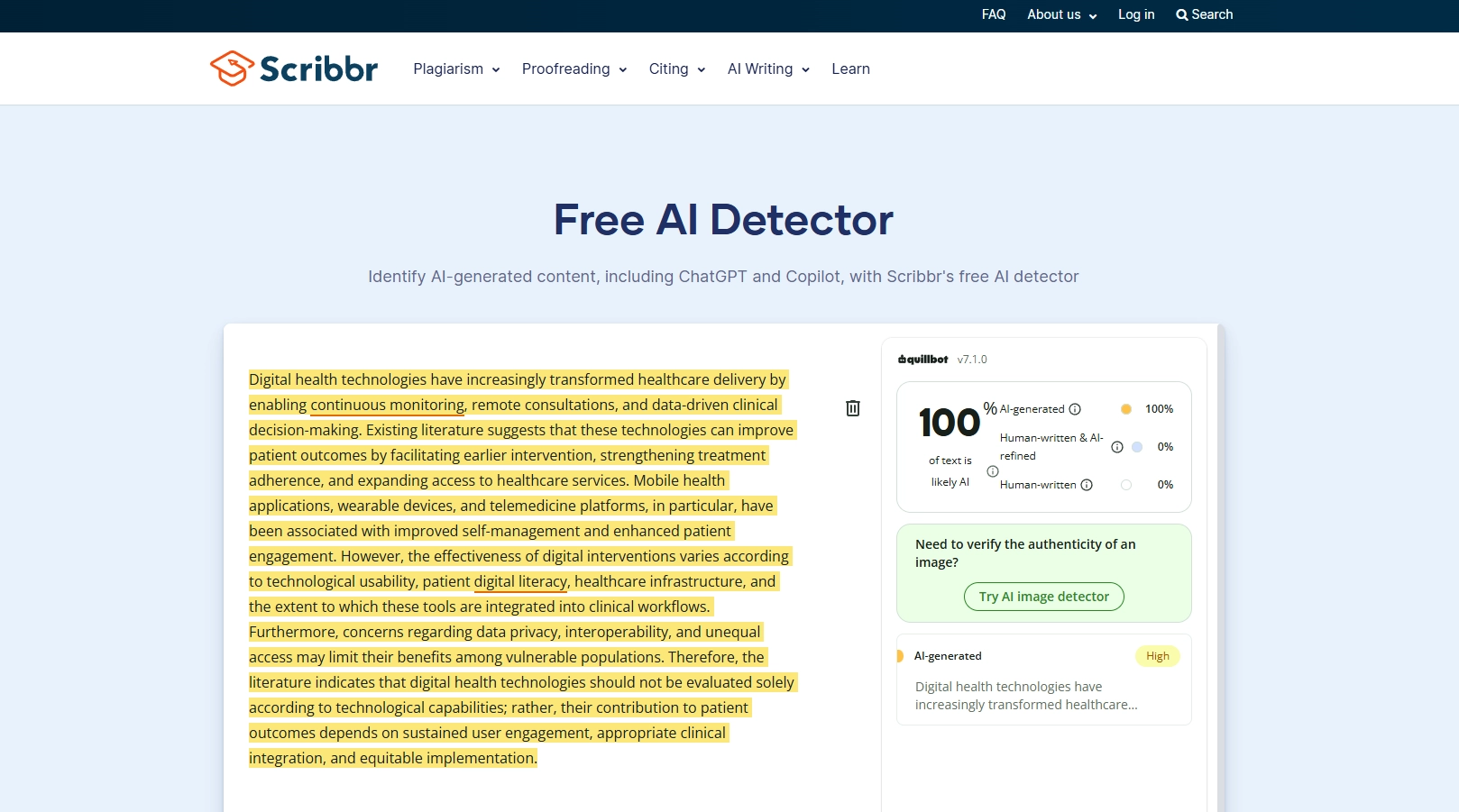
A free student-facing checker, with a paid tier, from the editing company of the same name. It lands in the high-70s to mid-80s percent range in accuracy tests, which makes it a convenient pre-submission screen and a weak basis for any integrity decision. Use it the way you would a first opinion, then confirm with a stronger tool.
Sapling
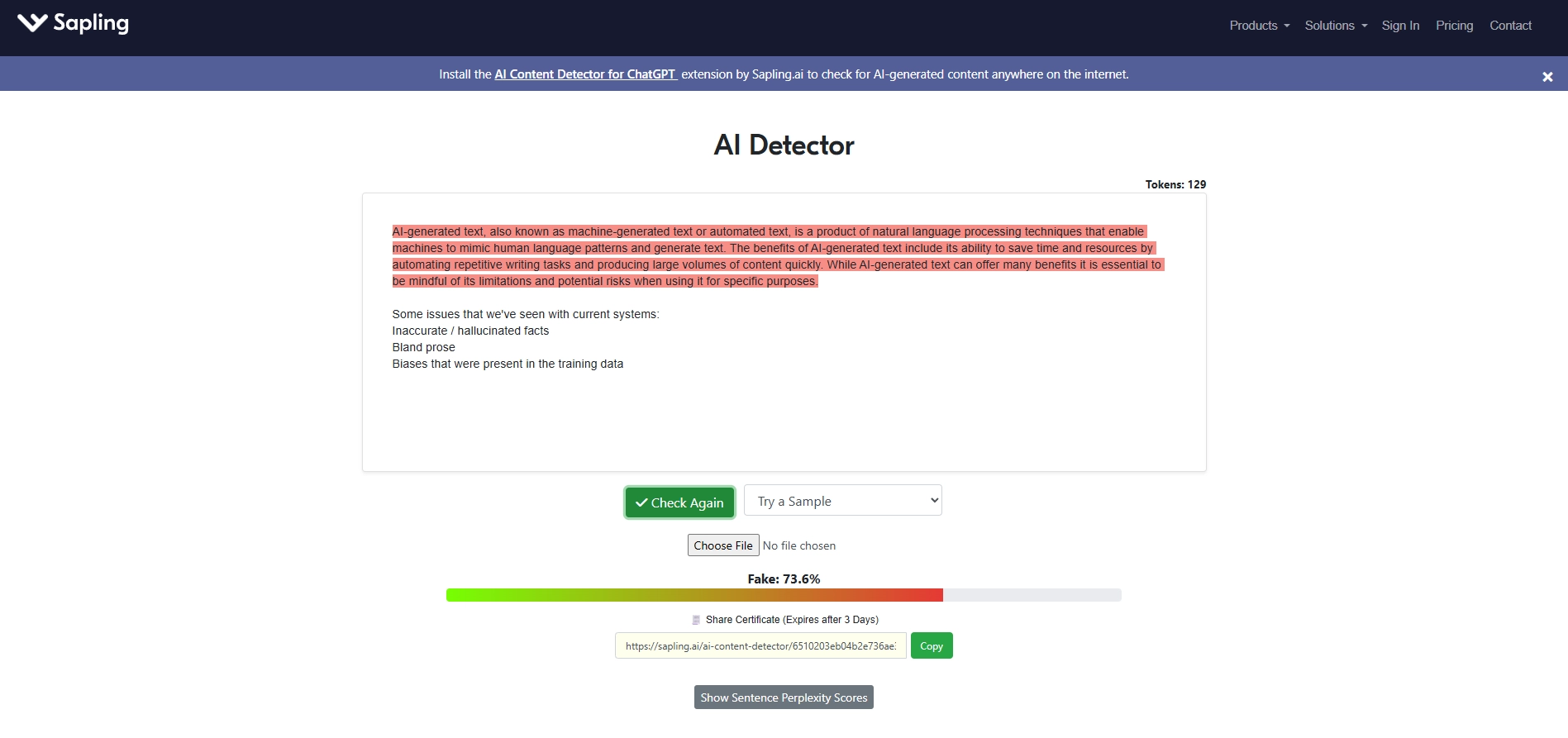
Built for business and customer-service text rather than academia, and a useful cautionary tale: it advertises up to 97% accuracy, yet one peer-reviewed study found it flagged 90% of genuinely human-written samples as AI. If a score from a tool like this is ever used against you, that is the study to know about. It is also why this guide keeps repeating the same rule: no single detector's number is evidence.
Step 1: Identify which sections are flagged
Don't rewrite your entire paper. That's a waste of time and will probably make things worse.
Instead, run your text through a detector that shows per-sentence or per-paragraph analysis. GPTZero's sentence-level highlighting is particularly useful here. It will show you exactly which passages are being flagged as likely AI-generated.
In our experience, AI detection scores are rarely uniform across a paper. You'll typically find that 2-3 sections are driving most of the score - often the introduction, the literature review, or heavily structured methodology descriptions. Those are the sections to focus on.
Copy your text into a detector. Note the flagged passages. That's your hit list.
Step 2: Rewrite flagged passages manually
This is the most effective single step you can take to reduce your AI detection score, and there's no shortcut around it.
Take each flagged passage and rewrite it from scratch. Don't edit the existing text. Open a blank document and write the same idea in your own voice. This forces you to break the statistical patterns that detectors are catching.
Three specific techniques that work:
Vary your sentence length deliberately. AI text tends toward 15-25 word sentences with remarkable consistency. Mix in some short sentences. Then follow with a longer one that develops the idea more fully and incorporates a subordinate clause or two. This variation alone can drop a paragraph's AI score significantly.
Add personal academic voice. Where appropriate, insert hedging language ("this may suggest"), qualification ("with the qualification that"), or disciplinary phrasing specific to your field. AI tends to write in generic academic English. Your field has its own conventions - use them.
Restructure, don't just rephrase. If the AI-generated version listed three points in a numbered format, combine them into flowing prose. If it used a topic-sentence-then-evidence structure, try leading with the evidence and building to the claim. Structural changes are more effective than word-level changes.
Step 3: Use an AI humanizer for stubborn sections
Some passages resist manual rewriting - particularly methods sections with fixed procedural language, or results sections built around statistical reporting. These sections are inherently structured and predictable, which makes detectors flag them regardless of whether AI wrote them.
For these sections, an AI text humanizer can help. A good humanizer introduces natural variation in sentence structure and word choice while preserving technical accuracy.
The key word is "good." Most humanizers will strip your technical vocabulary and mangle your citations. Use one built for academic text - one that understands "p < 0.05" is a statistical expression, not a typo to fix. Our guide on humanizing AI text for academic writing covers how to choose and use these tools without compromising quality.
Reduce Your AI Score in Minutes
Our text humanizer is built for academic writing. It preserves citations, technical terms, and scholarly tone while reducing AI detection scores.
Try the Text Humanizer FreeStep 4: Re-check with multiple detectors
After rewriting and humanizing, run your revised text through at least three different detectors. We recommend GPTZero, ZeroGPT, and Copyleaks, because they use different models and catch different patterns.
Why three? Because no single detector is authoritative. A passage that scores 5% on GPTZero might score 30% on ZeroGPT. Your professor might use any of them - or a different one entirely. By checking multiple detectors, you're covering more ground.
If your text scores below 15% across all three, you're in safe territory. If one detector still flags a section, go back to that specific passage and apply the manual rewriting techniques from Step 2.
What does not work
Some popular tactics fail reliably, and a few make the score worse.
- Synonym-swapping paraphrasers replace words while keeping AI-typical sentence structure, which is what detectors actually measure. Scores often rise after a word-swap pass.
- Character tricks (invisible Unicode, look-alike letters, added whitespace) are normalized away before analysis by modern detectors, and some flag the manipulation itself.
- Translation round-trips through another language degrade meaning and citations while leaving machine-typical rhythm intact.
- Deliberate typos lower the quality of the manuscript without changing the statistical patterns detectors read.
Structural revision is the only approach that changes what detectors measure: sentence rhythm, word predictability, and paragraph shape. Manual rewriting and academic humanization both do this; the difference is speed.
Where to focus, section by section
Different parts of a paper flag differently, so spend your rewriting time where it counts.
Abstract. Often the most flagged section because it is dense and formulaic by nature. Vary sentence structure, and avoid opening three consecutive sentences with "This study," "This paper," or "This research," a pattern AI loves.
Introduction. Personal positioning statements work here. "We became interested in this question when..." or "The gap became apparent during our review of..." First-person narrative elements are hard for a model to produce naturally and read as human authorship.
Methods. Inherently formulaic, so it naturally scores low on perplexity. This is where AI detection is least reliable and where markers expect rigid convention. Focus on accuracy rather than humanization.
Results. Report specific findings with concrete numbers. "Participants in the treatment group showed a mean improvement of 3.7 points (SD = 1.2, p = 0.003)" reads as human. Generic summarization reads as AI.
Discussion. Your interpretive voice matters most here. Engage with contradictory findings, acknowledge limitations specifically rather than generically, and connect results to your broader research program. These elements require real expertise and read as authentically human.
Why some human-written text gets flagged (false positives)
Here's something that surprises most people: purely human-written text regularly triggers AI detectors.
We tested this ourselves. We took five passages written entirely by human researchers - no AI involvement at all - and ran them through GPTZero, ZeroGPT, and Copyleaks. The average AI score across all passages was 18%. One methods section scored 34% AI despite being written by hand by a postdoc with ten years of experience.
False positives happen because academic writing shares structural features with AI output. Both tend toward formal register, consistent paragraph structure, and predictable vocabulary within a discipline. Detectors can't distinguish between "this sounds like AI because AI wrote it" and "this sounds like AI because it's formal academic prose."
This is why panicking over a moderate AI score is counterproductive. Some level of detection is normal, even for entirely original work. For a deeper look at how reliable these tools actually are, see our analysis of AI detection accuracy in 2026.
Do Grammarly, QuillBot, and other editing tools increase your AI score?
They can, and it catches people off guard because the draft starts fully human. What these tools change is exactly what detectors measure.
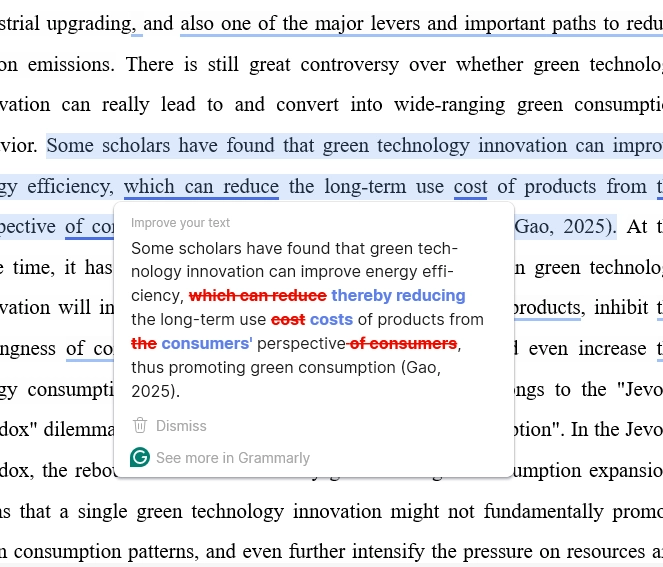
The screenshot below shows Grammarly working through a human-written economics manuscript. Its suggestion replaces "which can reduce" with "thereby reducing" and reorders "the consumers' perspective" into "the perspective of consumers". Every swap is grammatically correct, and every swap moves the sentence toward the smooth, formal register that language models default to.
The same review pass proposed "underscoring" in place of "which highlights", one of the most recognizable AI-typical words in academic prose:
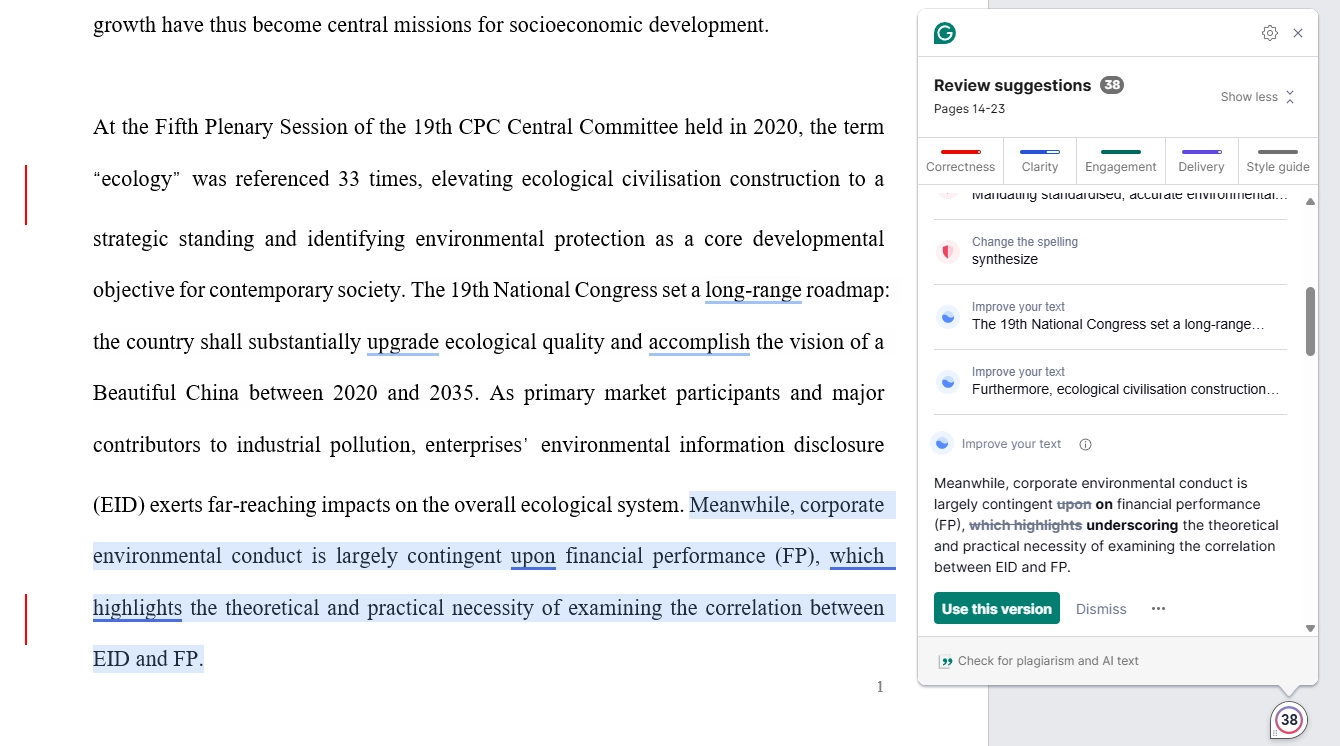
One accepted suggestion changes nothing. A few dozen change the statistical profile of the document: sentence rhythm gets more uniform, connectives get more formal, and words like "thereby", "moreover", and "underscoring" accumulate. That profile is what detectors score, and some now name it directly. Scribbr's detector, shown earlier in this guide, reports a separate "Human-written & AI-refined" category for exactly this kind of text. QuillBot's paraphrase modes push further in the same direction, because rewriting whole sentences into a house style is the entire product.
The fix is not to skip editing. It is to use an editor that corrects errors without restyling your prose. ProofreaderPro's Light proofreading mode is detector safe for this reason: it fixes grammar, spelling, and punctuation as individual tracked changes and leaves your sentence structure and word choices alone, so the patterns detectors fingerprint stay yours. Run it from the AI proofreader, review each change, and your score reflects your writing rather than your editing tool.
The realistic target: under 15%, not 0%
Stop trying to hit 0%. It's not achievable, and chasing it will make your writing worse.
A 0% AI score would require text so erratic and unpredictable that it would read as poorly written. The statistical patterns that detectors look for overlap significantly with the patterns of clear, well-organized academic prose. Eliminating all detector signals means eliminating clarity and structure.
The realistic target for academic work is under 15% across multiple detectors. At that level, your text falls within the normal range for human-written academic content. Most institutions that use AI detection set their thresholds at 20% or higher, recognizing that some level of pattern matching is inevitable.
Here's the workflow we recommend:
- Write or generate your draft - however you produce it
- Run it through GPTZero to identify flagged sections
- Manually rewrite the worst-scoring passages using the techniques above
- Use the text humanizer on stubborn sections that resist manual rewriting
- Re-check across three detectors - GPTZero, ZeroGPT, Copyleaks
- Target under 15% on all three, then stop
Going below 15% offers diminishing returns. The time you'd spend chasing a lower number is better spent improving your paper's actual content and argumentation.
Next time: write first, use AI second
The most reliable way to avoid a high score in the first place is to reverse the typical AI workflow: write your own draft first and use AI only to refine it. A rough, imperfect human draft carries your sentence rhythms, word choices, and structural habits, and AI refinement smooths the surface without erasing those deeper patterns.
- Write a rough draft from your notes and research, without AI assistance
- Revise for structure and argument on your own
- Use AI for specific tasks: grammar checking, sentence clarity, word choice suggestions
- Review and modify AI suggestions to match your voice
- Do a final read-through to confirm the text sounds like you
Over the longer term, the same habit builds the strongest defense there is: a distinctive voice. Read widely in your field, write regularly, and use an AI proofreading tool for polish after the thinking is done. Genuinely human writing has patterns no model replicates, and a detector has nothing to catch when the writing is yours.
The ethics, stated plainly
There is a meaningful difference between two situations. Using AI to write a paper you claim as your own work, then hiding the AI's involvement, is academic dishonesty, and no amount of humanizing changes that. Using AI as a writing tool for grammar, clarity, and structure, then making sure the output is not falsely flagged, is responsible tool use. The test is the intellectual contribution: the ideas, analysis, and arguments must be yours. Many universities now write this distinction into their AI policies, so check yours and disclose tool use where required.
Frequently asked questions
How do I reduce my AI percentage below 20%?
The most effective method is manual rewriting of flagged sections. Run your text through a sentence-level detector like GPTZero, identify the specific passages that are driving your score up, and rewrite those passages from scratch - don't just edit them. Focus on varying sentence length, adding field-specific phrasing, and restructuring paragraphs. For stubborn sections, use an academic AI humanizer. Most students can get below 20% within one round of targeted rewriting.
Does ZeroGPT detect all AI-written text?
No. ZeroGPT, like all AI detectors, has significant limitations. In independent testing, ZeroGPT's accuracy ranges from 60-85% depending on the type of text and the AI model that generated it. It performs better on unedited GPT-3.5 output and worse on text from newer models or text that has been manually revised. It also produces false positives - flagging human-written text as AI-generated - at rates between 5-15% depending on the writing style. No AI detector should be treated as infallible.
Why is my AI score high even though I wrote it myself?
False positives are common in academic writing because formal scholarly prose shares statistical features with AI-generated text - consistent sentence length, formal vocabulary, predictable paragraph structure, and topic-sentence organization. Methods sections and literature reviews are particularly prone to false positives because they follow rigid disciplinary conventions. If you wrote the text yourself, document your writing process and speak to your instructor rather than trying to rewrite perfectly good prose to fool a detector.
What AI detection score do most universities accept?
There is no universal standard. Policies vary widely between institutions and even between departments within the same university. The most common thresholds we've seen range from 15% to 25%, though some institutions flag anything above 10% for review. Many universities don't set hard cutoffs at all - they use AI detection as a screening tool that triggers human review rather than automatic penalties. Check your specific institution's policy, and when in doubt, aim for under 15% across multiple detectors.
Does the same method work on Turnitin's AI score?
Yes. Turnitin's AI indicator reads the same class of statistical patterns as GPTZero and Copyleaks, so structural revision moves it the same way. For Turnitin-specific detail, see our Turnitin humanizer guide and the Turnitin score guide.
Is it ethical to avoid AI detection in academic writing?
It depends on how you used AI. If you used AI as a writing aid, for grammar checking, sentence clarity, or structuring your own ideas, then ensuring your text is not falsely flagged is reasonable. If you used AI to generate content you are claiming as your own intellectual work, avoiding detection is dishonest. The ethical question is about the ideas, not the text style. Always check and follow your institution's AI use policy.
What is the most effective way to avoid AI detection?
Writing your own first draft and using AI only for refinement. Text that starts as human writing retains human patterns even after AI editing. Combining this with deliberate sentence length variation, personal voice injection, and a final detection check produces text that consistently passes AI detectors.
Do AI detectors work on non-English text?
AI detectors for non-English text are less reliable than English-language detectors. Most commercial detectors are trained primarily on English data. If you are writing in another language, the false positive rate may be higher, and the strategies for avoiding detection may need to be adapted to that language's conventions.
Can Turnitin detect AI-assisted writing?
Turnitin's AI detection identifies patterns consistent with AI generation, and it cannot distinguish between AI-generated and AI-assisted text. Text that was mostly written by a human and refined with AI may still be flagged. Writing first drafts yourself and varying sentence structure significantly reduces false flagging.
Reduce AI detection scores while preserving academic tone, citations, and technical vocabulary.

Moe is an NLP engineer with a PhD in natural language processing. His research covers computational linguistics, text analysis, and machine learning, and it fed directly into the editing and humanization models behind ProofreaderPro. He writes about the part of the process most people never see: how a language model reads a sentence, scores it, and decides what to change.